


Flywoo
Flywoo is a leading brand in the world of FPV drones, known for its innovation, quality and performance. They offer a wide range of products, from individual components to complete ready-to-fly drones (BNF and PNP), aimed at both beginner and expert pilots.
Its catalog includes a wide variety of Frames, high-performance motors with different KVvalues, and flight control systems (FC) y ESC, often integrated into AIOboards. Flywoo also stands out for its video transmission systems, including options compatible with O4 and high-gain antennas with specifications of dBi.
The brand has earned a reputation for its commitment to research and development, which translates into cutting-edge products that offer an exceptional flying experience. Flywoo also offers a wide selection of XT60 connectors and other essential accessories for assembling and maintaining FPV drones. Its small drones of the type are especially popular Whoop, ideal for flying in tight spaces.
Flywoo also offers a variety of Props to optimize your drones' performance and strives to provide complete solutions for the FPV community, including batteries LiPo and other components needed to get the most out of this exciting hobby. Communication via UART is a common feature in its products, allowing advanced configuration and customization.
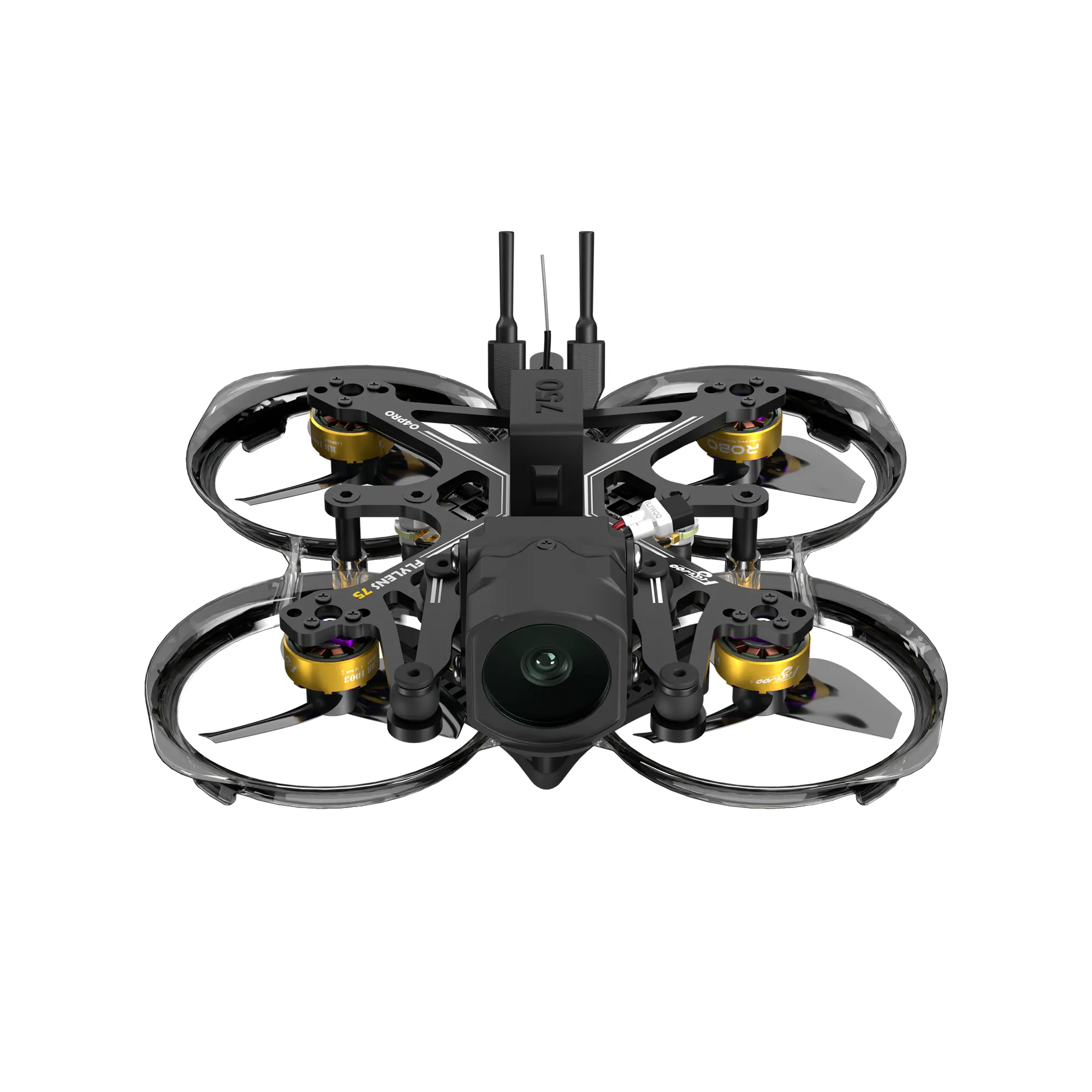
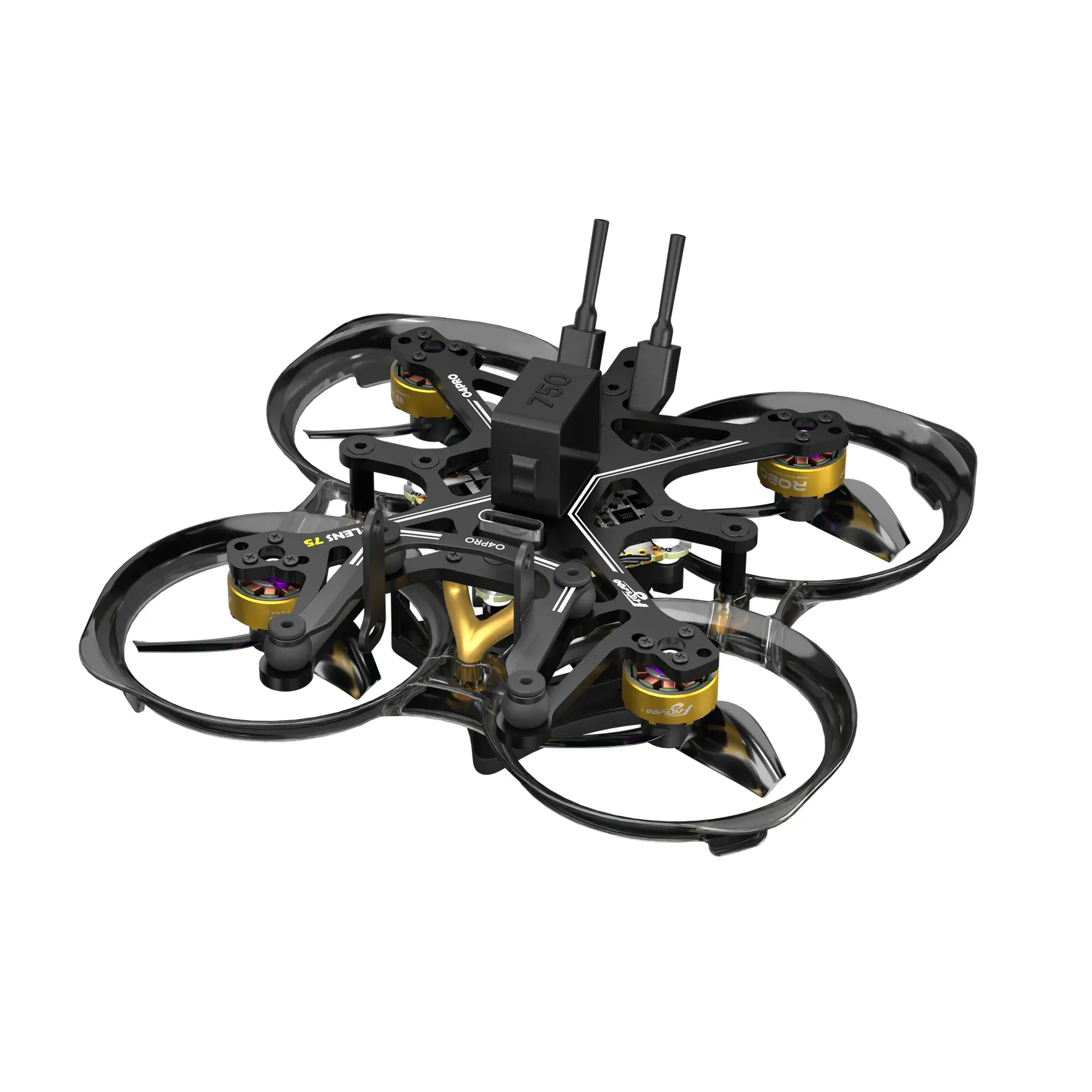
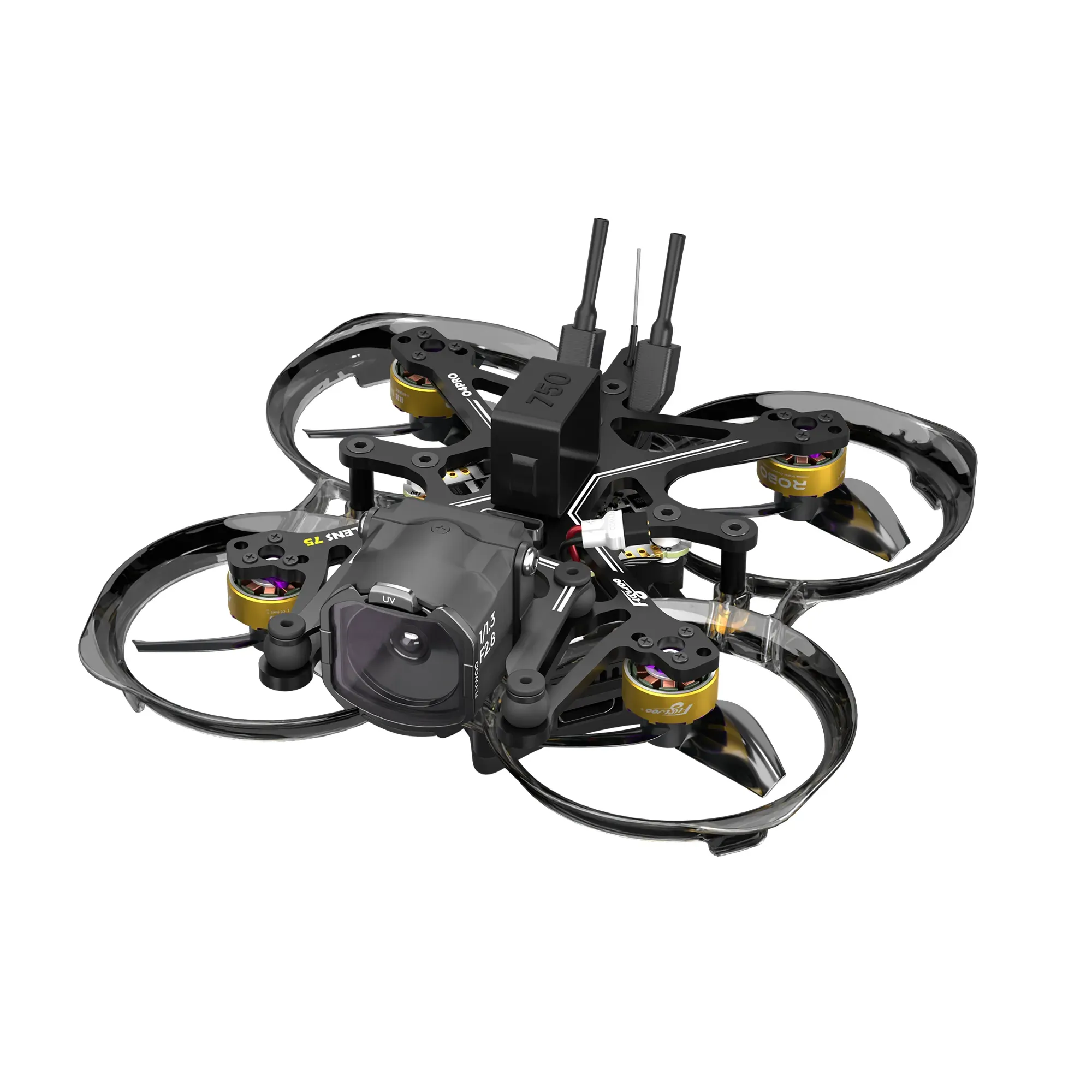
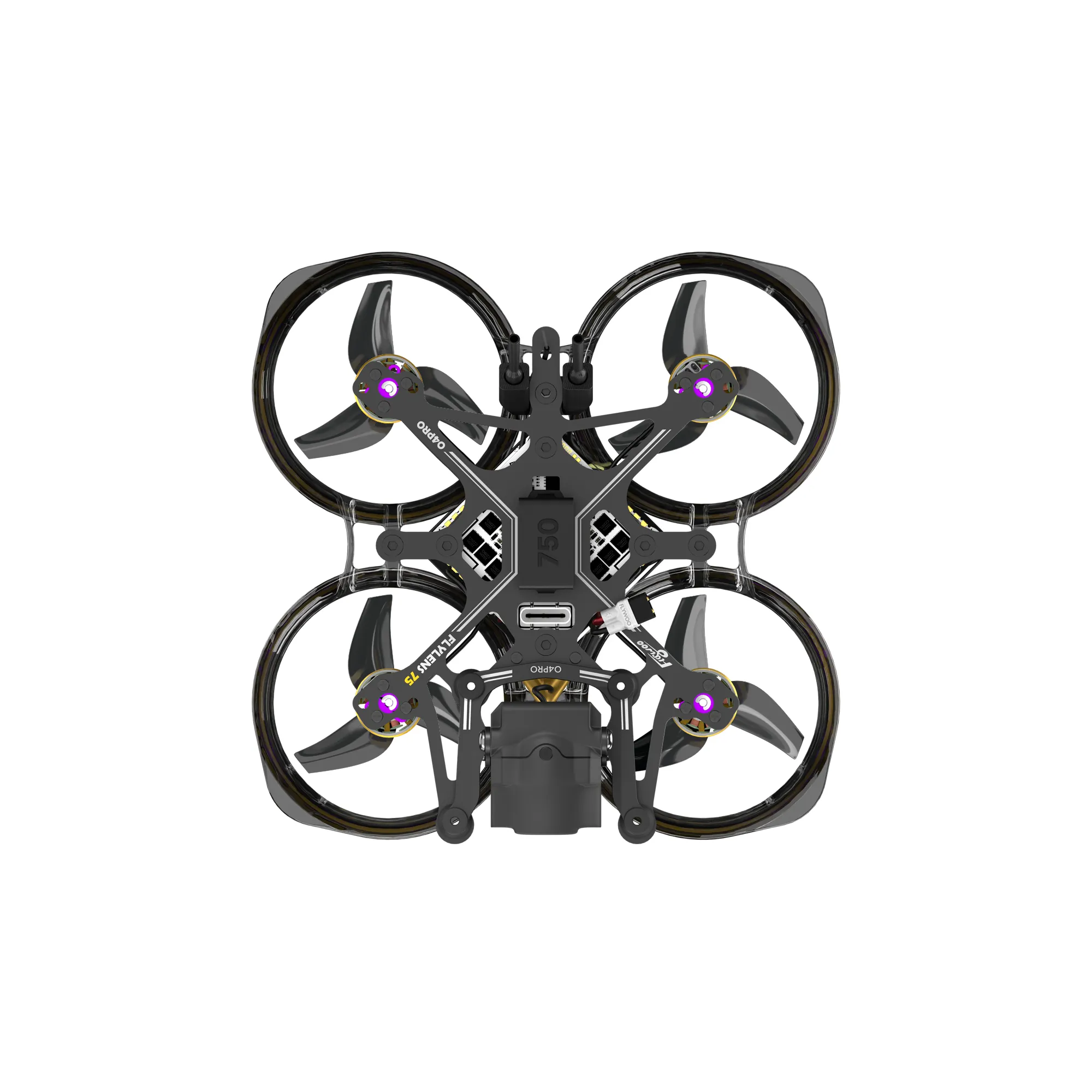
Flylens 75 HD O4 PRO 2S Whoop FPV
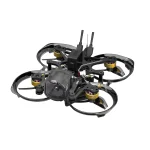
DronThe Flylens75, the smallest DJI O4 Whoop drone on the market, has been meticulously designed by the FLYWOO team. This compact, portable drone has a durable body that combines carbon fiber and PC materials, and is compatible with O4 image transmission. Its exclusive shock-absorbing gimbal design enables high-quality 4K video recording with no 'jello' effect.
Equipped with a 405 BGA flight controller, a 1003 power motor and the new 1611-3 propellers, the Flylens75 is suitable both for stable indoor recording and dynamic outdoor flying.
Key Features
This drone has been designed to deliver an unmatched FPV flying experience, combining performance, durability and ease of use. We have optimized every component so you can focus on enjoying the flight and pushing your limits.
Power and Efficiency
Equipped with a high-performance motor and an optimized setup, this drone offers exceptional power and superior energy efficiency. You will be able to perform complex tricks, fly at high speed and enjoy long flight times on a single battery charge. The combination of an aerodynamic design and high-quality components guarantees precise stability and control at all times.
Advanced Imaging System
Enjoy exceptional image quality with our latest-generation camera system. Real-time video transmission is sharp and lag-free, letting you fly with confidence and precision. The wide dynamic range and high resolution capture every detail, even in challenging lighting conditions. Compatible with high-definition video systems for an immersive visual experience.
Durability and Toughness
Built with high-quality materials and a robust design, this drone is designed to withstand the rigors of FPV flying. The frame is made of lightweight, tough carbon fiber, which provides excellent protection against impacts and vibrations. The internal components are carefully protected to ensure long-term reliability. This drone is ready to face any challenge you throw at it.
Ease of Use and Maintenance
We have simplified the setup and maintenance process so you can start flying quickly. The modular design makes it easy to access internal components for repairs and upgrades. Complete documentation and online tutorials will guide you through every step of the process. This drone is ideal for both beginner and expert pilots.
- Compact, Lightweight Design:
We have prioritized creating a drone with a small size and minimal weight to maximize agility and flight time. This allows more precise maneuvers and a more immersive FPV experience.
Weight optimization is crucial in FPV, and this design makes it easy to install high-performance components without compromising flight capability. Lower weight also reduces stress on the ESC y la FC, extending their lifespan.
Este Frame has been designed to be compatible with a wide range of components, including options for AIO and setups with multiple UARTfor total configuration flexibility.
The combination of a lightweight design and smart weight distribution contributes to exceptional stability in flight, even in windy conditions. The high-gain antenna, with an optimized power of dBi ensures reliable, long-range video transmission with the O4.
system. Ideal both for beginner pilots looking for an Whoop easy to control, and for experts who want an agile platform for tricks and racing, this design offers a perfect balance between performance and portability. Compatibility with standard XT60 connectors and LiPo batteries simplifies maintenance and operation.
Choosing the right Props together with a high-efficiency motor with an optimized KV maximizes thrust and energy efficiency.
The newly designed Flylens75 features a compact, lightweight body, which makes it easy to transport and operate. - «`html High-definition video recording: The ability to capture high-definition video is a crucial feature for many FPV drone pilots. It lets you record sharp, detailed footage, ideal for editing impressive videos or simply for reliving your flights from an immersive perspective. Image quality depends on several factors, including the camera's resolution, sensor and lens. A larger sensor generally captures more light, resulting in better low-light performance and a wider dynamic range. The lens also plays an important role, affecting sharpness, distortion and field of view.
When choosing an FPV video system, consider the maximum resolution you want to record. Common options include 1080p at 60fps and 4K at 60fps. A higher frame rate (fps) results in smoother video, especially during fast movements. It is also important to take into account the video codec used, as this affects file size and image quality. The most popular codecs include H.264 and H.265 (HEVC). H.265 offers better compression, meaning you can get similar image quality at a smaller file size.
In addition to resolution and codec, video transmission quality is fundamental for a smooth FPV experience. This depends on latency, which is the delay between the camera and the FPV goggles. Low latency is essential for precise control and a sense of immersion. Latency can be affected by several factors, including transmission frequency, distance and interference. Make sure to choose a video system with low latency and a stable signal.
Finally, consider the video recording format. Some systems record directly to a microSD card, while others stream the video to an external recorder. Recording to a microSD card is more convenient, but can be limited by the card's capacity. Streaming to an external recorder offers more flexibility and storage capacity, but requires additional equipment.
«`The O4 PRO version of the digital image transmission system is capable of recording 4K video at 120 fps in high definition, allowing you to capture spectacular moments. - Damping Platform Design: The design of the damping platform is crucial for the durability and performance of your FPV drone. Good damping reduces the vibrations transmitted to the camera and electronic components, resulting in cleaner images and more stable flight. There are several strategies to achieve effective damping, from using flexible materials in the camera mount to the design of the *Frame* itself. **Damping Materials:** * **Rubber:** Rubber is an inexpensive option that is easy to implement. It can be used in the form of washers, blocks or even as a lining for the camera mount. * **Silicone:** Silicone offers better damping than rubber and is more temperature resistant. It is ideal for applications where high vibration absorption is required. * **TPU (Thermoplastic Polyurethane):** TPU is a flexible, durable material commonly used in 3D printing custom damping parts. It allows you to create complex designs optimized for your drone's specific needs. * **Foam:** Closed-cell foam, such as polyethylene foam, can be effective at absorbing high-frequency vibrations. **Mounting Techniques:** * **Soft Mount:** Using rubber or silicone mounts between the camera and the *Frame* is a simple way to reduce vibrations. * **Isolated Mount:** Completely isolating the camera from the *Frame* using a suspension system can provide the best damping, but it can also be more complex to implement. * **Using Screws and Washers:** Using screws with rubber or silicone washers can help reduce vibrations transmitted through the mounting points. * **Tension Adjustment:** In some damping systems, it is possible to adjust the tension of the damping materials to optimize performance. **Additional Considerations:** * **Weight:** Adding damping materials can increase the drone's weight, which can affect flight time. It is important to find a balance between damping and weight. * **Vibration Frequency:** Different damping materials are more effective at absorbing different vibration frequencies. It is important to consider the vibration frequencies generated by your drone and choose the right damping materials. * **Compatibility:** Make sure the damping materials you choose are compatible with the *Frame* and camera materials.
Experimenting with different materials and mounting techniques is the key to finding the best damping solution for your FPV drone. Good damping can significantly improve the quality of your footage and the flying experience overall.
Equipped with an exclusive CNC vibration-damping platform for the camera, it effectively reduces camera vibration, eliminates the 'jello' effect and delivers stable recorded footage. - Quick-Mount Structure:Designed with a quick-disassembly structure, it simplifies maintenance and component replacement by the user, improving ease of use.
- Reverse-Thrust Power System:
This power system is designed to deliver exceptional performance in situations that require precise maneuverability and absolute control. The reverse-thrust design allows instant response to the controls, ideal for acrobatic and freestyle flying. We have optimized efficiency to maximize flight time without compromising the raw power needed for the most demanding maneuvers.
The combination of high-quality components guarantees superior reliability and a long service life. This system is compatible with a wide range of Frames y Props, which lets you customize your FPV drone to suit your specific needs. Installation is simple and straightforward, and setup is done easily through your FC using the ports UART disponibles.
The connector XT60 provides a secure, reliable connection for your battery LiPo, while the ESC offer precise, efficient voltage regulation. This system is optimized to work with video systems O4 and high-gain antennas dBi, enabling clear, uninterrupted video transmission even over long distances. It is an excellent choice both for experienced pilots and for those looking to improve their flying experience Whoop or with any other type of drone.
With a carefully selected KV , this power system offers the perfect balance between speed and torque, allowing precise control across the whole acceleration range. The AIO systems are compatible, further simplifying your drone build.
By using a reverse-thrust propulsion system, the aircraft's stability and flight time are optimized, letting you enjoy longer flying experiences. - Quick-Release Battery Compartment:
This innovative design allows a quick, safe battery swap, optimizing your flight time and minimizing downtime. The quick-release system ensures a firm, reliable connection, preventing accidental disconnections during flight. Ideal for pilots looking for efficiency and convenience in the field.
Made of high-quality materials, this compartment is designed to withstand the demands of FPV flying. Its robust construction protects the battery from impacts and vibrations, extending its lifespan. Compatible with a wide range of battery sizes LiPo and configurations of ESC.
Installation is simple and does not require complex modifications to your Frame. It integrates seamlessly with most FC and systems AIO, offering a versatile solution for different types of drones. Be sure to check compatibility with your connector XT60 and the correct voltage for your system.
Improve your flying experience with this quick-release battery compartment, designed for demanding pilots looking for performance and reliability. Optimize your workflow and enjoy more time in the air with this essential accessory.
Equipped with a quick-release battery compartment, this is compatible with various battery models, letting users replace them easily when needed. - Materiales Duraderos:
We have carefully selected high-quality materials to ensure this drone can withstand the rigors of FPV flying. From the frame to the arms, every component has been designed to offer exceptional strength and durability. This means less repair time and more time enjoying your flights.
The combination of impact-resistant materials and a robust design allows the drone to absorb knocks and vibrations, protecting the sensitive internal components. This is especially important in acrobatic flights and in challenging environments.
In addition, we have paid special attention to abrasion and wear resistance, ensuring the drone maintains its structural integrity even after numerous landings and flights.
The frame is built from a combination of carbon fiber and polycarbonate materials, offering strength to withstand moderate impacts and drops.
Specifications
This drone is designed to deliver exceptional performance in FPV acrobatic flying. We have optimized every component for maximum efficiency and durability, allowing pilots to experience an immersive connection and precise control.
The propulsion system is based on high-performance motors with a design optimized for heat dissipation and long service life. The combination with a latest-generation FC and high-efficiency ESCensures instant response to the controls and superior stability in flight.
The drone's structure, or Frame, is made of high-strength composite materials, which provides excellent protection for the internal components and a significant weight reduction. This translates into greater agility and longer flight times.
The video system transmits a clear, lag-free signal through a high-gain antenna of dBi, allowing pilots to enjoy an immersive, uninterrupted FPV experience. It is compatible with the O4 protocol for high-quality video transmission.
The drone is powered by high-capacity LiPo batteries, connected through a XT60. La AIO connector integrates all the essential components, simplifying assembly and setup.
The drone's setup and tuning are done through an intuitive interface, using a UART port for communication with the control software. This drone is ideal both for beginner pilots looking for a stable, easy-to-fly platform and for experienced pilots looking for extreme performance.
In addition, this drone is compatible with a wide range of Props, which lets pilots customize the drone's performance and efficiency to their preferences. It is also an excellent base for building a Whoop.
|
Modelo |
Flylens 75 HD O4 RPO 2S Whoop FPV Drone |
| Marco |
Flylens 75 HD O4 PRO frame kit |
| Electronics This is where you will find all the electronic components you need to build and maintain your FPV drone. From motors to receivers and video systems, we have everything you need to take your flying to the next level. **Motors:** The heart of your drone. We offer a wide range of motors with different **KV** values to suit your flying needs. **Flight Controllers (FC):** The brain of your drone. **FC**s manage all the sensors and control the motors to provide stable, precise flight. We have **AIO** options that integrate the **FC** and **ESC**s on a single board. **Electronic Speed Controllers (ESC):** They control the motors' speed in response to signals from the **FC**. **Receivers:** They receive the signals from your transmitter and send them to the **FC**. **Video Systems:** They transmit the image from your drone's camera to your FPV goggles. They include cameras, video transmitters and antennas. Make sure to choose an antenna with the right gain in **dBi** for your flying style. **Batteries:** Your drone's power source. We use high-quality **LiPo** batteries to provide the power you need. **Connectors:** You will need connectors such as the **XT60** to connect the battery to your drone's electronics. **Cables and Connectors:** To connect all the components. Make sure to use the right wires for each connection, especially the **UART**s. **Antennas:** They improve the video signal and your drone's range. **Other:** Various electronic components such as capacitors, resistors and fuses.
We also have a large selection of accessories to help you keep your drone in perfect working order, such as propeller guards, dampers and repair tools. If you are looking to build a **Whoop** or a racing drone, we have everything you need, including compatible **frames**, **props** and electronics. With the arrival of **O4**, make sure you have compatible electronics to enjoy the best flying experience. | GOKU F405 HD 1-2S ELRS AIO V2 (42688)
GOKU F405 HD all-in-one (AIO) flight controller (FC) board, compatible with 1-2S batteries and equipped with an ELRS receiver. Version 2 (V2), model number 42688. |
| Transmisión
The video transmission system is arguably the most important part of an FPV setup. It’s what allows you to *see* what the drone sees, and a poor transmission can ruin a flight quickly. Here’s a breakdown of the key components and considerations:
**Video Transmitter (VTX)**
The VTX is responsible for taking the video signal from your camera and broadcasting it to your goggles. Key specs to consider include:
* **Power Output:** Measured in milliwatts (mW), higher power means a longer range, but also increased risk of interference and potential legal issues. Common power levels are 25mW, 200mW, 600mW, and 800mW.
* **Frequency Bands:** VTXs operate on different frequency bands. The most common are 5.8GHz, and increasingly 2.4GHz. Each band has multiple channels.
* **Channels:** Within each frequency band, there are numerous channels. It’s crucial to select a channel that isn’t congested to avoid interference from other pilots.
* **Protocols:** Different protocols like SmartAudio, Tramp, and Crossfire allow you to control VTX settings (power, channel) from your goggles or transmitter.
**Antennas**
The antenna is what radiates the video signal from your VTX. Antenna choice significantly impacts range and signal quality.
* **Polarization:** Antennas come in different polarizations (linear, circular). Matching the polarization of your VTX and goggle antennas is essential for optimal performance.
* **Gain:** Measured in **dBi**, higher gain antennas provide a more focused signal, increasing range in a specific direction, but reducing field of view.
* **Types:** Common antenna types include dipole, patch, and cloverleaf. Each has its own strengths and weaknesses.
**Goggles**
Your FPV goggles receive the video signal from the VTX. Key features to look for include:
* **Receiver:** The receiver in your goggles needs to be compatible with the frequency band and protocols used by your VTX.
* **Diversity:** Diversity receivers use multiple antennas to select the strongest signal, improving reliability.
* **Resolution:** Higher resolution goggles provide a sharper, more immersive experience.
* **Field of View (FOV):** A wider FOV creates a more immersive experience.
**Tips for a Solid Transmission**
* **Antenna Placement:** Keep your VTX antenna away from carbon fiber and other conductive materials, as these can absorb the signal.
* **Channel Selection:** Use a channel scanner to find a clear channel before flying.
* **Power Management:** Be mindful of your VTX power output and comply with local regulations.
* **Firmware Updates:** Keep your VTX and goggle firmware up to date for optimal performance and bug fixes.
The video transmission system is, without a doubt, the most important part of an FPV setup. It is what lets you *see* what the drone sees, and a poor transmission can quickly ruin a flight. Here is a breakdown of the key components and considerations: Video Transmitter (VTX)The VTX is responsible for taking the video signal from your camera and transmitting it to your goggles. Key specifications to consider include:
AntenasThe antenna is what radiates the video signal from your VTX. The choice of antenna significantly impacts range and signal quality.
GafasYour FPV goggles receive the video signal from the VTX. Key features to look for include:
Tips for a Solid Transmission
| DJI O4 PRO Air Unit The DJI O4 PRO air unit represents a significant leap in FPV video transmission technology, offering ultra-low latency and exceptional robustness. This system is designed for pilots who demand maximum performance and reliability in their flights. **Key features:** * **High-quality video transmission:** The O4 PRO delivers sharp, smooth video transmission, enabling an immersive, detailed FPV experience. * **Ultra-low latency:** Minimizes the delay between the camera and the goggles, crucial for precise control and fast response. * **Longer range:** Enjoy extended transmission range, letting you fly farther with confidence. * **Improved signal stability:** The O4 PRO's advanced technology ensures a stable video signal even in environments with interference. * **Compatibility:** Designed to integrate seamlessly with a wide range of FPV drones and goggle systems. The DJI O4 PRO air unit is the ideal choice for professional FPV pilots and enthusiasts looking for the latest in video transmission technology. Its superior performance and reliability make it an essential component for any high-performance FPV setup. |
| Camera
Choosing the camera is crucial for an immersive FPV experience. Consider factors such as resolution, sensor size, latency and image quality in different lighting conditions. Modern cameras offer features such as Wide Dynamic Range (WDR) to improve detail in high-contrast scenes and customizable exposure settings. For video transmission, compatibility with the O4 protocol is increasingly common, offering better image quality and lower latency compared with earlier systems. Make sure the camera is compatible with your video transmitter and that the antenna has the right gain (dBi) for your flying style and environment. It is also important to consider the camera's power connector (XT60 is a common standard) and whether it requires a clean, stable power supply provided by your ESCs through the FC. Some cameras are integrated into AIO units, simplifying setup and reducing total weight. If you plan to fly in tight spaces, a Whoop with an integrated camera can be an excellent choice. Remember that choosing the right Props will also affect camera performance and flight stability. Finally, protecting the camera is vital. A robust, well-designed Frame will help protect it from impacts and damage during hard landings. | DJI O4 PRO Air Unit |
| Propeller
The propeller is a crucial component on any FPV drone. Its design and size directly impact the drone's performance, including efficiency, speed and agility. There are different types of propellers, each optimized for a specific flying style. Consider factors such as pitch, diameter and number of blades when selecting the right propellers for your setup. A good choice of propellers can make the difference between a smooth, controlled flight and a frustrating, inefficient experience. Experimenting with different options will let you find the perfect balance for your needs. In addition, it is important to regularly inspect your propellers for damage, such as cracks or chips, since even a small defect can significantly affect flight and potentially cause a crash. |
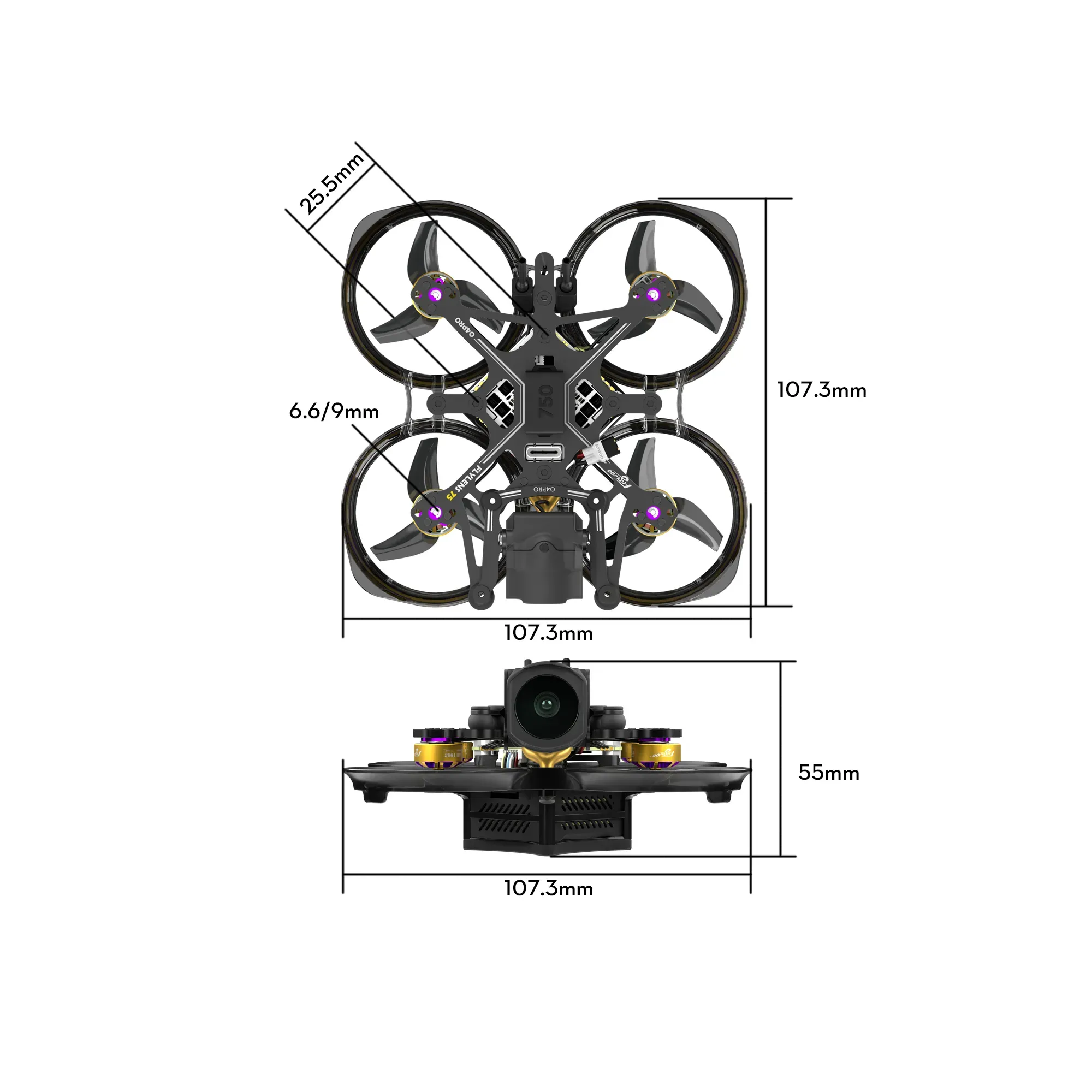
1.5 mm diameter shaft for 1611-3 40 mm motors. |
| Motor
The motor is the heart of your drone, converting electrical energy into mechanical energy to spin your props. When choosing a motor, consider the stator size, the number of stages, and the KV rating. Larger stators generally provide more torque, while more stages offer higher efficiency.
The motor is the heart of your drone, converting electrical energy into mechanical energy to spin your props. When choosing a motor, consider the stator size, the number of stages and the KV. Larger stators generally provide more torque, while more stages offer greater efficiency. MountingMotors are typically mounted to the frame using screws. Ensure the screws are the correct size and length to avoid damaging the motor or frame. You may also need to use threadlocker to prevent the screws from loosening during flight. Motors are typically mounted to the frame using screws. Make sure the screws are the correct size and length to avoid damaging the motor or the frame. You may also need to use thread locker to keep the screws from loosening during flight. WiringMotors are connected to the ESCs using motor wires. The order of the wires determines the direction the motor spins. If the motor is spinning in the wrong direction, simply swap any two of the wires. Motors connect to the ESCs using motor wires. The order of the wires determines the direction in which the motor spins. If the motor spins in the wrong direction, simply swap two of the wires. Power ConnectorMost motors use an XT60 connector to receive power from the LiPo battery. Ensure the connector is securely connected to the ESC to avoid power interruptions during flight. Most motors use a connector XT60 to receive power from the battery LiPo. Make sure the connector is securely connected to the ESC to avoid power interruptions during flight. Signal ConnectorThe signal wire from the FC is connected to the ESC, which then sends a signal to the motor to control its speed. This connection is typically made using a 3-pin UART connector. The signal wire from the FC connects to the ESC, which then sends a signal to the motor to control its speed. This connection is typically made using a 3-pin UART connector. Antenna MountingSome motors have mounting points for antennas. This can be a convenient way to position your O4 antenna for optimal signal strength, typically measured in dBi. Ensure the antenna is securely mounted and does not interfere with the props. Some motors have mounting points for antennas. This can be a convenient way to position your antenna O4 for optimal signal strength, typically measured in dBi. Make sure the antenna is securely mounted and does not interfere with the props. Considerations for Whoop and Micro DronesWhen building a Whoop or micro drone, motor selection is even more critical. These drones rely on high KV motors and efficient AIO flight controllers to achieve stable flight. Pay close attention to the motor’s weight and power consumption. When building a Whoop or micro drone, motor selection is even more critical. These drones rely on high- KV motors and efficient AIO flight controllers to achieve stable flight. Pay close attention to the motor's weight and power consumption. | ROBO 1003 14800KV
High-speed brushless motor designed for competition FPV drones and micro drones. It offers exceptional performance in racing and acrobatics thanks to its high KV value. Ideal for setups that require quick response and high power relative to its size. Compatible with a wide range of Frames y ESC, and connects easily to the FC via a connector XT60. Its optimized design allows efficient heat dissipation, extending the motor's lifespan. Perfect for pilots looking to maximize the performance of their drones Whoop and those using small-sized Props . This motor is an excellent choice for those looking for a reliable, high-performance component for their FPV projects. Make sure to use suitable batteries LiPo and a correct setup of UART to get the most out of this motor. The antenna used must have an adequate gain, measured in dBi, to ensure optimal video transmission with the system O4. |
| Antena
The antenna is a crucial component in your FPV system, responsible for transmitting and receiving the video signal to and from your drone. A good antenna can mean the difference between smooth flight and signal loss, resulting in a possible crash. There are various types of antennas, each with its own characteristics and advantages. Types of AntennasThe most common antennas for FPV are circularly polarized (CP) antennas. These antennas are less susceptible to polarization, meaning they work well regardless of the drone's orientation. Among CP antennas, we find:
In addition to CP antennas, there are also linearly polarized antennas, but they are less common in FPV because of their sensitivity to polarization. Considerations When Choosing an AntennaWhen choosing an antenna, consider the following factors:
Experimenting with different antennas is the best way to find the one that best suits your needs and flying style. Remember that antenna quality is just as important as its gain. Investing in a good antenna can significantly improve your FPV experience. | Flywoo 5.8G Light Antenna, 5.8G with 3dBi, UFL connector and brass body. |
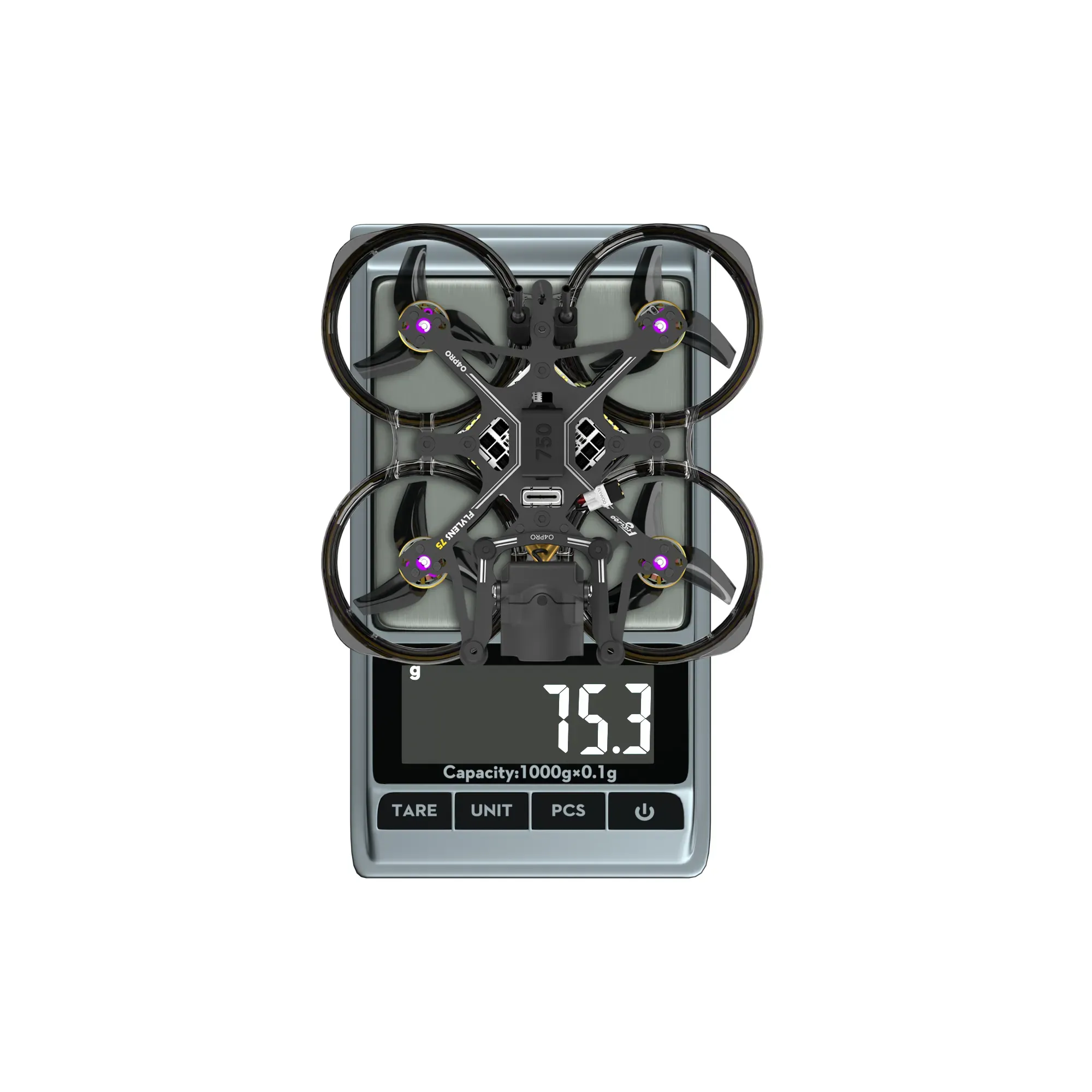
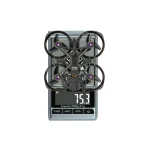
| Peso | 75.3g |
| 550mAh Battery Battery selection is crucial for your FPV drone's performance and flight time. You must consider the voltage (S), capacity (mAh) and discharge rate (C) to make sure the battery is compatible with your setup and can provide the power needed for your flying style. A higher capacity (mAh) generally means a longer flight time, but also implies more weight. The discharge rate (C) indicates how much current the battery can safely supply. A higher discharge rate is needed for more powerful motors and acrobatic flying. Make sure your ESCs can handle the battery's discharge rate. The LiPo batteries are the standard in FPV drones because of their high energy density and power-to-weight ratio. However, they require careful handling and a specific charger to ensure their safety and longevity. Always check each cell's voltage before and after flight to maintain optimal performance and avoid damage. The battery connector, typically XT60, must be compatible with your drone and charger. Also consider the type of balance plug to ensure correct, safe charging of each cell. | (34% takeoff thrust / 3m / 55km/h ) |
| 750mAh Battery Battery selection is crucial for your FPV drone's performance and flight time. You must consider the voltage (S), capacity (mAh) and discharge rate (C) to make sure the battery is compatible with your setup and can provide the power needed for your flying style. A higher capacity (mAh) generally means a longer flight time, but also implies more weight. The discharge rate (C) indicates how much current the battery can safely supply. A higher discharge rate is needed for more powerful motors and aggressive flying. Make sure your ESCs and FC can handle the discharge rate of the battery you choose. LiPo batteries are the standard in the FPV world because of their high energy density and power-to-weight ratio. It is essential to handle them carefully, as they can be dangerous if damaged or charged incorrectly. Always use a LiPo-specific charger and follow the recommended safety precautions. The battery connector, typically XT60, must be compatible with your drone. Check the polarity before connecting the battery to avoid damaging the electronic components. | (36% takeoff thrust / 4 meters / 55 km/h) |
| 1000mAh Battery Battery selection is crucial for your FPV drone's performance and flight time. You must consider the voltage (S), capacity (mAh) and discharge rate (C) to make sure the battery is compatible with your setup and can provide the power needed for your flying style. A higher capacity (mAh) generally means a longer flight time, but also implies more weight. The discharge rate (C) indicates how much current the battery can safely supply. A higher discharge rate is needed for more powerful motors and aggressive flying. It is essential to use LiPo-specific chargers and follow the recommended safety precautions to avoid damage or fire. Storing batteries correctly when not in use is also important to extend their lifespan. | (38% takeoff thrust / 5 meters / 55 km/h) |
Box contents:
1x Flylens 75 HD O4 PRO 2S Whoop FPV Drone
1x 90° Type-C USB data cable for the O4 air unit
1x TPU mount for 2S 550mAh battery
1x TPU mount for 2S 750mAh battery
1x TPU mount for 2S 1000mAh battery
8x 1611-3 Propellers
1x Destornillador
1x screw set
Update Log: The new O4 PRO-compatible camera version offers an adjustable angle from 0° to 25°.


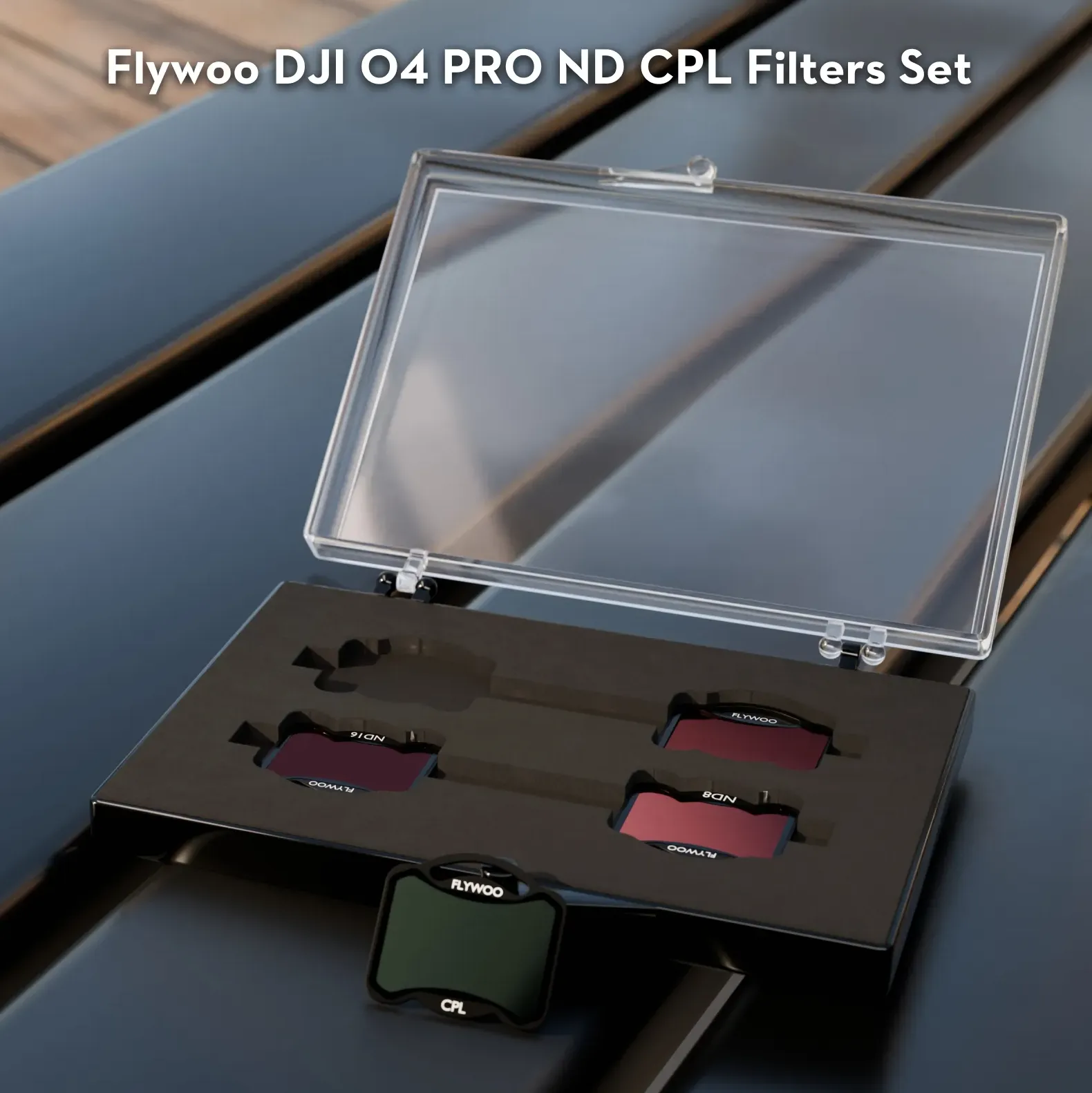
Flywoo ND Pro Filter Set for DJI O4
We have customized high-quality filters for the O4 PRO. A professional filter kit made with AGC optical glass for resistance to oil, smudges and scratches, ensuring sharp images. The snap-fit design ensures a secure installation with no slipping. The CNC frame is robust and durable. With four filters, it adapts to various recording needs.
(Must be purchased separately, not included in the product accessories)
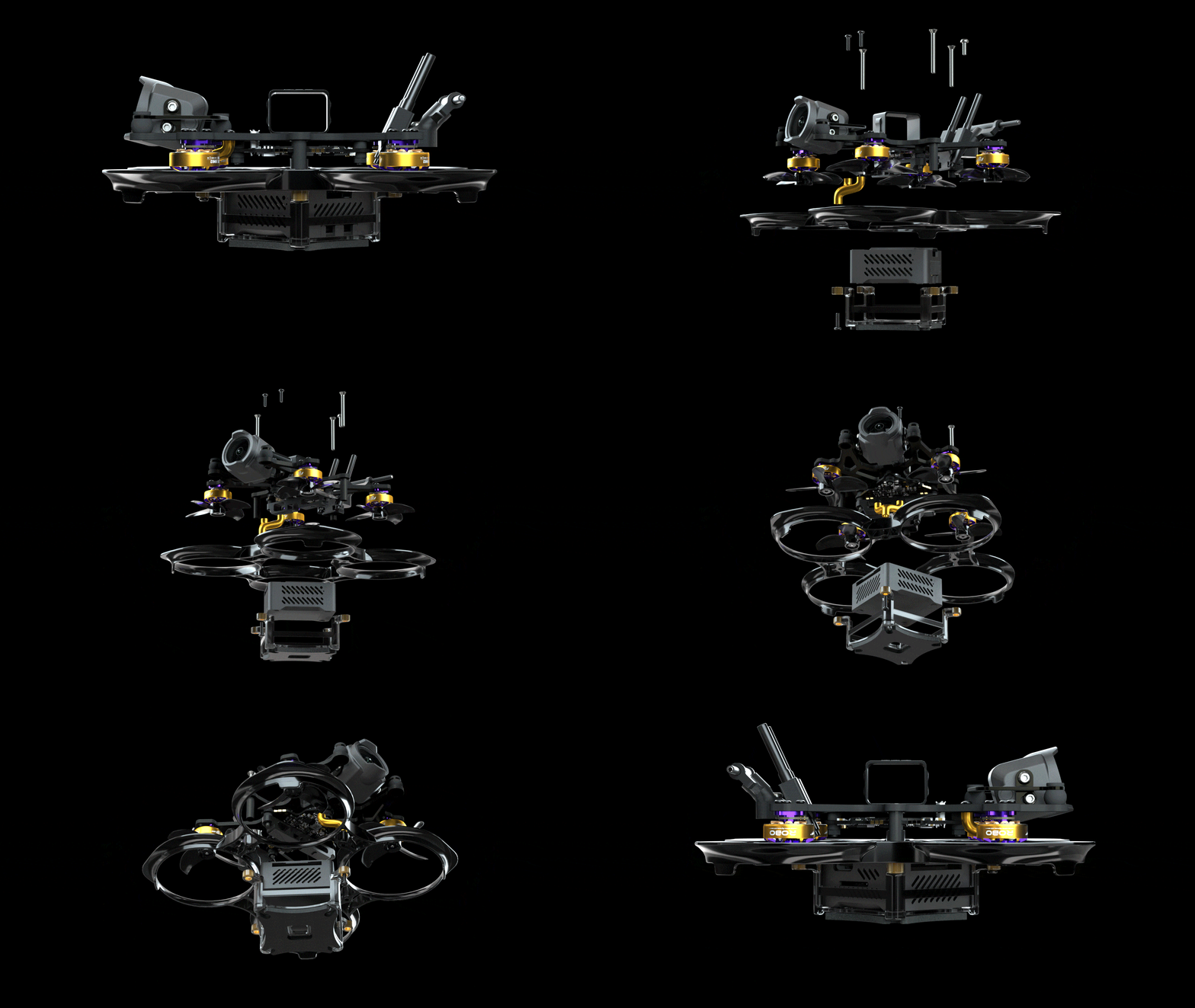
Compact design for capturing stable, high-definition footage.
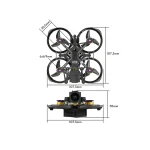
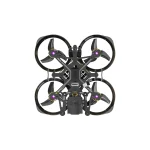
The Flylens 75 features a compact, robust design that ensures structural stability while achieving a minimal footprint. With just five screws, the entire structure can be assembled easily and quickly, providing convenience and efficiency. The newly designed Y-shaped structure improves the aircraft's overall shock resistance, ensuring stable, smooth high-definition image capture.
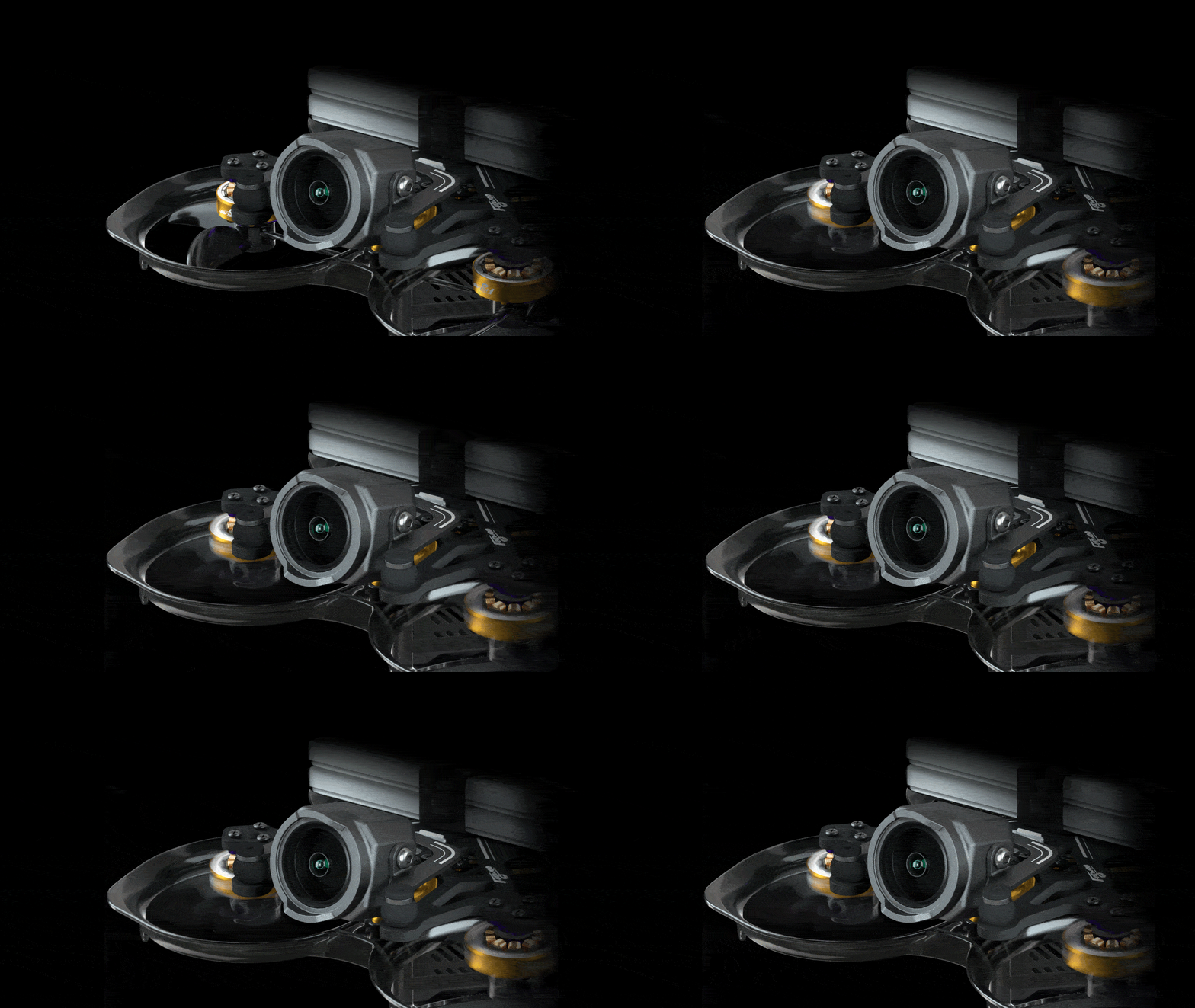
Unique four-point shock-absorbing structure for stable, high-quality video recording.
The Flylens 75 incorporates a unique four-point shock-absorbing structure design, similar to the Flylens 85, which guarantees stable, high-quality video recording in various environments. Even during daytime flights in intense sunlight, you will be able to capture clear, stable images, improving your flying experience.
This four-point shock-absorbing structure design effectively eliminates high-frequency vibrations and the 'jello' effect, offering excellent anti-shock performance that ensures your video recordings remain stable at all times.

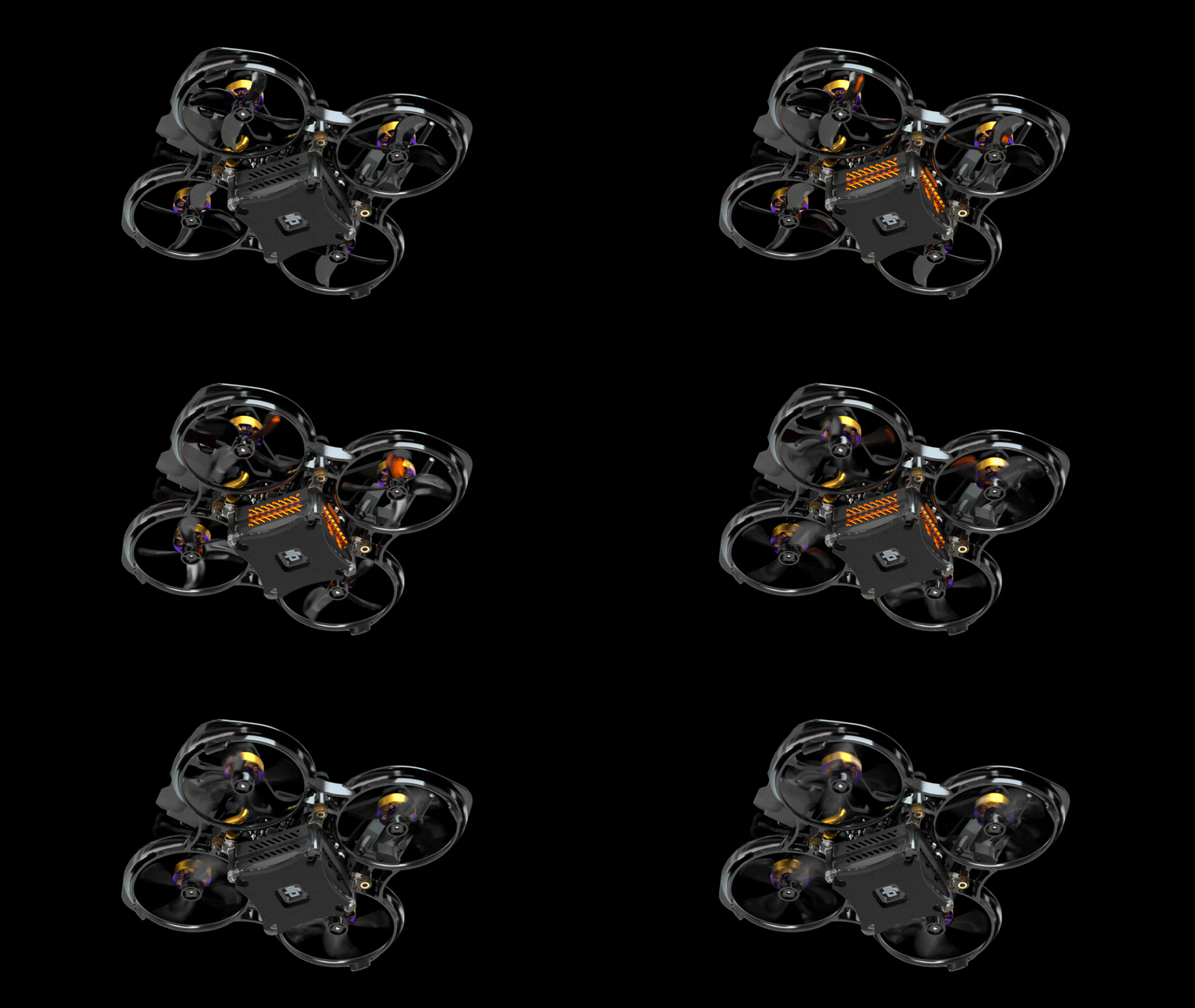
Reverse-Thrust Design, Lower Position of the VTX Module Compartment
The reverse-thrust design offers more stable flight performance and more flexible maneuverability, while optimizing battery life. The lower location of the VT module compartment uses high-strength PC material to provide protection, improving heat dissipation and cooling effects.
«`html High-Performance F405 BGA Flight Controller «`
The GOKU F405 12A AIO is a highly integrated flight controller with advanced features. It incorporates an F405 BGA chip for greater processing power and a 12A 4-in-1 ESC for smooth operation. With 5 UART ports, I2C compass input and aReceptor
The receiver is a crucial component in your FPV drone, as it is responsible for receiving the signals from your transmitter (radio) and passing them to the flight controller (FC). A suitable choice of receiver directly impacts the range, latency and reliability of your connection, affecting the overall flying experience. There are various communication protocols available, each with its own advantages and disadvantages. Some of the most common include Crossfire, ELRS (ExpressLRS) and TBS Crossfire Nano. The choice of protocol will depend on your specific needs, such as desired range, noise immunity and budget. When selecting a receiver, consider factors such as compatibility with your transmitter, the number of channels needed to control your drone and additional features such as telemetry. Make sure the receiver is compatible with your flight controller and has the right supply voltage (normally through a connector XT60). Correct installation and setup of the receiver are essential for optimal performance. Pay attention to antenna orientation to maximize range and signal. Also make sure to configure the channels correctly on your transmitter and in the configuration software of the FC. A quality receiver, well configured, will give you a stable, reliable connection, letting you enjoy uninterrupted FPV flights. Remember that signal quality is essential for safe, controlled flight.

ROBO 1003 power system and 3-blade propeller.
Unleash your drone's full potential with the ROBO 1003 | 14800KV motor. Experience unmatched power and speed for thrilling flights that will leave you breathless.
Designed specifically for 1611-3 propellers, this propulsion system offers exceptional agility and maneuverability, even in tight spaces. It is compatible with 2S batteries of 550mAh~1000mAh, providing the perfect balance between flight time and performance. With up to 6 minutes of uninterrupted flight time, you will be able to capture stunning aerial footage that will take your breath away.
Quick-Mount, Quick-Remove Battery Compartment
The Flylens75 incorporates a quick-release battery compartment, which lets users select from various battery capacities and makes swapping it quickly easy.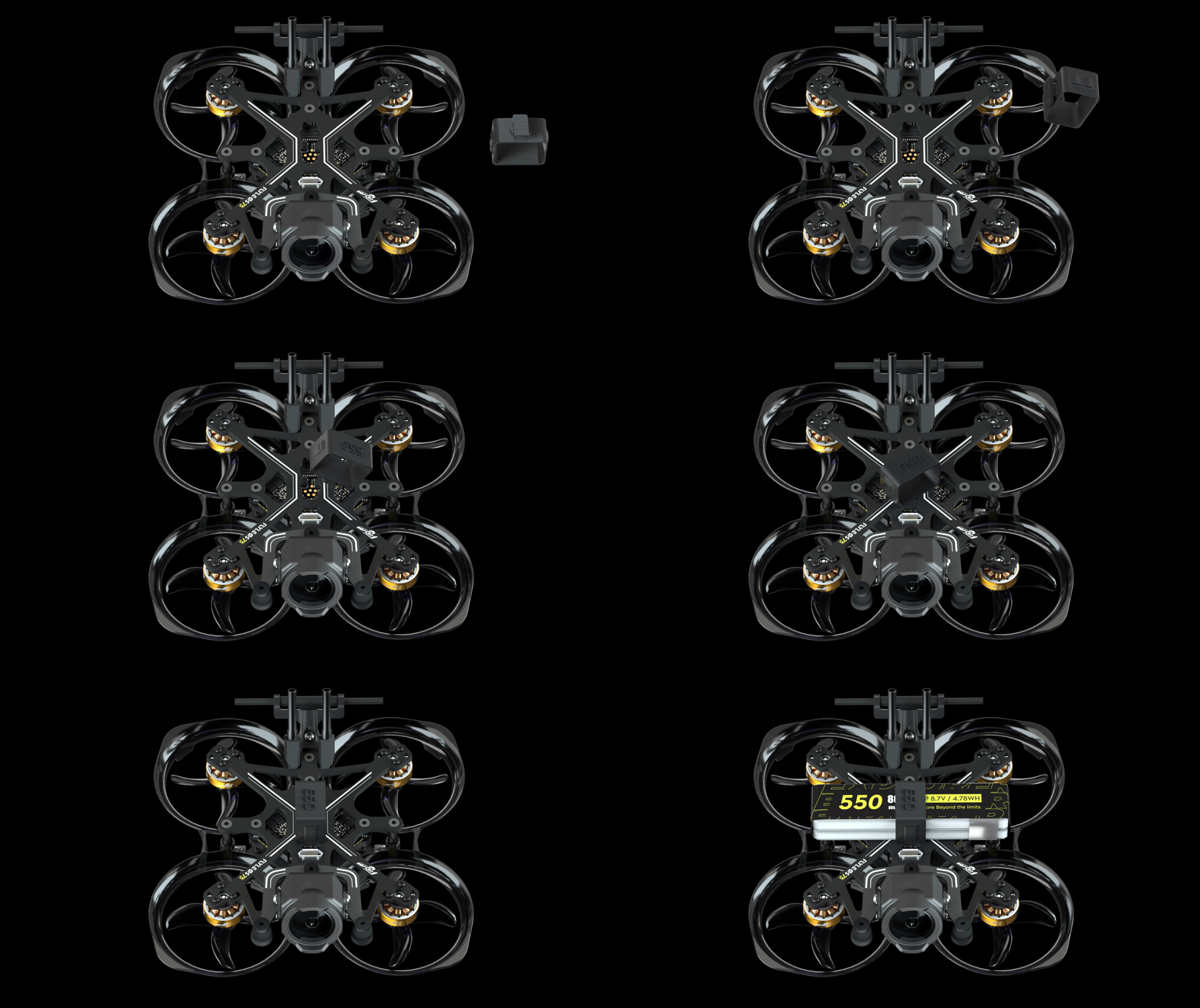
Flywoo XT30UP
The Flywoo XT30UP connector is a high-quality connection solution designed for FPV drones. It offers a safer, more compact alternative to traditional XT60 connectors, ideal for setups where space and weight are critical. Its optimized design allows a firm, reliable connection, minimizing the risk of in-flight disconnections. This connector is compatible with a wide range of FPV components, including batteries LiPo, ESCs y FCs. Its robust construction ensures exceptional durability, even in demanding flying conditions. The XT30UP is an excellent choice for pilots looking to improve the safety and efficiency of their power system. In addition, its small size makes it perfect for Whoops and other small craft where space is limited. It is a popular choice among pilots looking for superior performance and greater reliability in their drones. Consider the XT30UP for your next FPV builds and enjoy a safe, compact, high-performance power connection.
FLYWOO's custom XT30UP connector cable effectively solves the problem of connector breakage. We have meticulously designed a genuine, compatible XT30 housing fromAmass
Amass is a brand recognized in the FPV community for the quality and reliability of its connectors, cables and other accessories. They specialize in components designed to withstand the demands of acrobatic flying and the high currents demanded by modern drone systems. They offer a wide range of products, including battery connectors (XT60 and others), signal cables, power distributors and other essential items for building and maintaining FPV drones. Their focus on durability and performance has made them a popular choice among pilots of all levels. Amass is particularly known for its connector soldering tools, which make it easy to create clean, secure connections, crucial for optimal system performance. They also offer solutions for cable management and component protection, contributing to your drone's longevity and reliability.

❓ Preguntas Frecuentes
Is this product compatible with my setup?
Our products comply with FPV standards (mounting standards, XT60/XT30 connectors, etc.). See the voltages and dimensions in the specifications table above.
Do you have real stock in Spain?
Yes, everything shown as available ships from our warehouse in Spain with delivery in 24/48h.
Preguntas Frecuentes (FAQ)
Here you will find answers to the most common questions about our FPV drone products and services. If you can't find the answer you are looking for, don't hesitate to contact us.
What types of FPV drones do you sell?
We offer a wide range of FPV drones, from beginner models ideal for learning to fly, to high-performance racing drones. We also have components for custom builds, such as motors, receivers, cameras and video systems. Our selection covers different sizes and styles, including freestyle, acro and long-range drones.
What do I need to get started in FPV?
To get started in FPV, you will need an FPV drone, a radio controller (transmitter), FPV goggles, batteries LiPo, a compatible battery charger, and basic tools for maintenance. A flight simulator is also recommended to practice before flying the real drone. Also consider getting an adapter XT60 to charge the batteries and a voltage checker.
How do I choose the right motor for my drone?
Motor choice depends on several factors, such as the drone's size and weight, the type of flying you want to do and the battery voltage. The motor's KV value is an important indicator of its rotation speed. A higher KV means higher speed, but also higher power consumption. It is important to balance these factors to achieve the desired performance.
What is an ESC and what is it for?
Un ESC (Electronic Speed Controller) is an electronic speed controller that regulates the power sent to the drone's motors. It receives signals from the FC and adjusts the motors' speed accordingly, allowing you to control the drone's flight.
What is an FC and what functions does it have?
Una FC (Flight Controller) is the brain of the drone. It processes information from the sensors (gyroscope, accelerometer, barometer, etc.) and uses it to stabilize the drone and control its flight. It also manages communication with the radio controller, the receiver and other components.
What is an FPV video system and how does it work?
An FPV (First Person View) video system lets you see in real time what the drone sees, through FPV goggles. The drone's camera transmits the image to a video transmitter, which sends the signal to the FPV goggles. The O4 system is a popular option for its low latency and high image quality. The antenna's power, measured in dBi, influences the transmission range.
What are Props and how should I choose them?
Los Props (propellers) are essential for generating the drone's lift and thrust. The size, pitch and material of the Props influence the drone's performance. It is important to choose Props compatible with your motors and your flying style.
What are Frames and what should I consider when choosing one?
Los Frames are the main structure of the drone, where all the components are mounted. The material, size and design of the Frame influence the drone's durability, weight and maneuverability. Consider the type of flying you will do and the size of the components you will use when choosing a Frame.
What is an Whoop?
Un Whoop is a type of small, lightweight FPV drone, generally with protected propellers, designed for flying in tight spaces and indoors. They are ideal for practicing and learning to fly FPV without the risk of damaging the drone or the surroundings.
What is an AIO?
Un AIO (All-In-One) is a board that integrates into a single component the FC, los ESC and, sometimes, other components such as the video receiver. It simplifies assembly and reduces the drone's weight.
How do I configure the UART de mi FC?
The configuration of the UART (Universal Asynchronous Receiver/Transmitter) on your FC depends on the firmware you are using (Betaflight, EmuFlight, etc.). It generally involves assigning a specific UART to a device (receiver, telemetry, etc.) through the configuration software.
Q: What types of batteries are compatible with the Flywoo Flylens 75 HD O4 PRO 2S and what is the recommended voltage for optimal performance?
A: The Flylens 75 is compatible with 2S (7.4V) and 3S (11.1V) LiPo batteries. We recommend using batteries with an XT30 connector. For optimal performance, batteries of 450mAh to 650mAh with a discharge rate of 30C or higher are suggested. Using higher-capacity batteries may slightly affect the drone's agility due to the added weight.
Q: What is the maximum video resolution the Flywoo Flylens 75 HD O4 PRO 2S can record and what video codec does it use? Is it possible to record in LOG format for post-production?
A: The Flywoo Flylens 75 HD O4 PRO 2S is capable of recording video in 4K resolution up to 120 frames per second. It uses the H.265 codec for video recording. At this time, the O4 PRO system does not have the option to record directly in LOG format. However, color correction can be done in post-production to achieve a similar result.
Q: Which flight controllers are compatible with the Flywoo Flylens 75 HD O4 PRO 2S if I want to customize the configuration or update the firmware? Is it possible to use Betaflight?
A: The Flywoo Flylens 75 HD O4 PRO 2S comes pre-configured with a Flywoo F405 BGA flight controller. While the controller is compatible with Betaflight, Flywoo provides its own optimized firmware for this drone, which offers specific features and better integration with the O4 system. It is possible to flash Betaflight, but experience configuring FPV drones and understanding the implications of changing the firmware is recommended.


Reviews
There are no reviews yet