
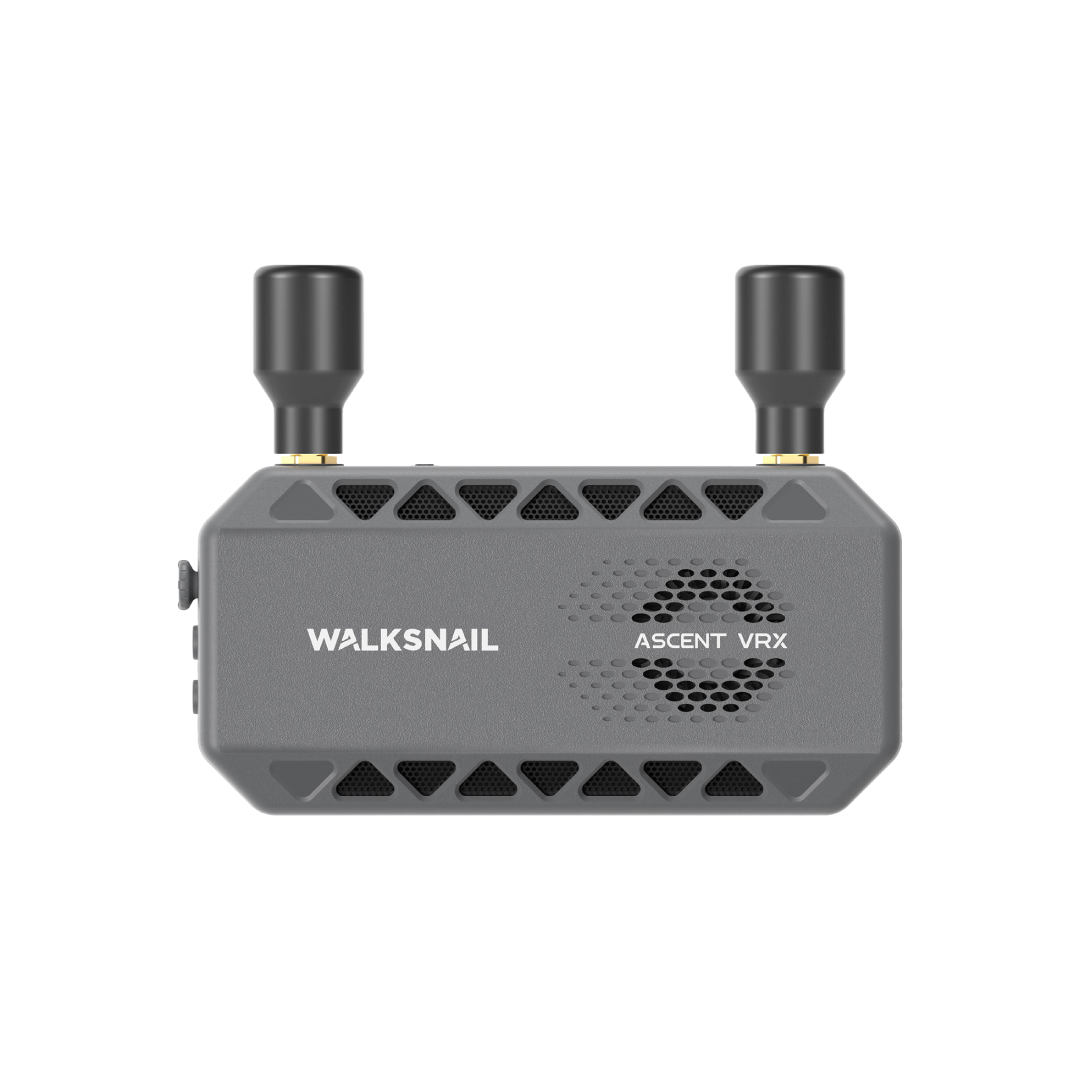
Walksnail has just expanded its budget-friendly Ascent ecosystem with the Ascent VRX ($99) and its bigger sibling, the VRX Pro ($149). The pitch is similar to what we recently covered with the BetaFPV P1 HD VRX Nano — an HD receiver you plug into what you already own via HDMI — but with a key difference: Walksnail explicitly markets it as compatible with «any goggles, monitor, or TV with an HDMI port,» not a closed list of models.
We break down what it actually includes, what Walksnail says about its numbers (with the caveat that these are manufacturer figures, not yet independently measured), and how it compares to the alternatives we already covered: BetaFPV P1 HD VRX Nano, DJI O4, and HDZero.
What is the Ascent VRX?
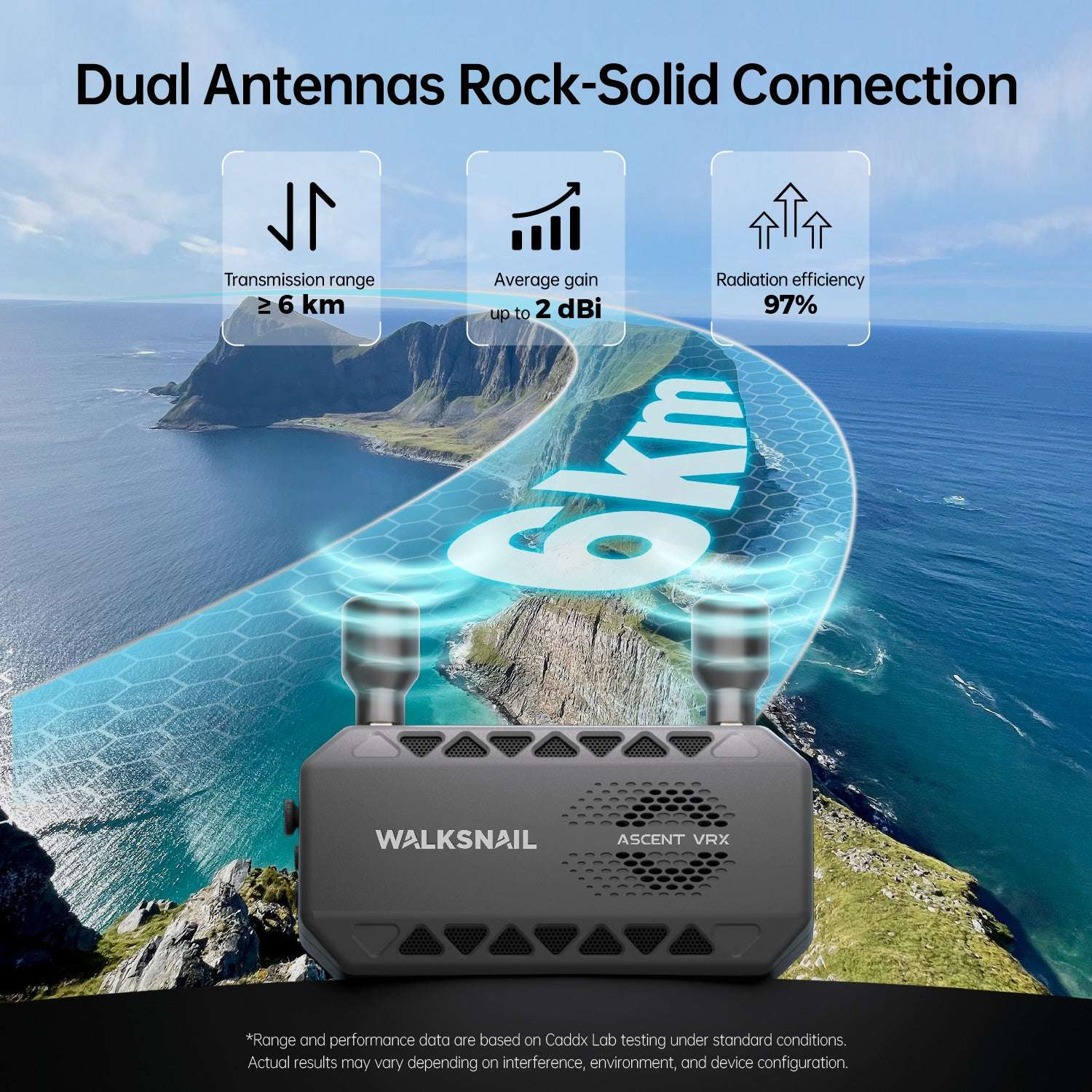
It’s the receiver of the Ascent family, Walksnail’s entry-level digital system. Unlike BetaFPV’s P1 HD VRX Nano — designed to physically fit specific Fat Shark and SKYZONE models — the Ascent VRX is a standalone receiver with HDMI output that, per Walksnail, works with any goggles, monitor, or TV that accepts that input.
| Specification | Ascent VRX |
|---|---|
| Price | $99 |
| Weight | 118g |
| Resolution | 1080p@60fps and 720p@120fps |
| Latency | up to 35ms (manufacturer figure) |
| Antennas | Dual circular polarized, ≥97% efficiency |
| Range | up to 6km (manufacturer figure) |
| Connection | Universal HDMI output |
| Recording | Built-in microSD, up to 256GB |
| power | 7.4–25.2V |
The VRX Pro ($149, 150g) steps up to 1080p@120fps, adds UVC output alongside HDMI, adaptive bandwidth, and a claimed range of up to 8km, with dual 2.8dBi antennas.
The other half: the Ascent Lite, the drone-side transmitter
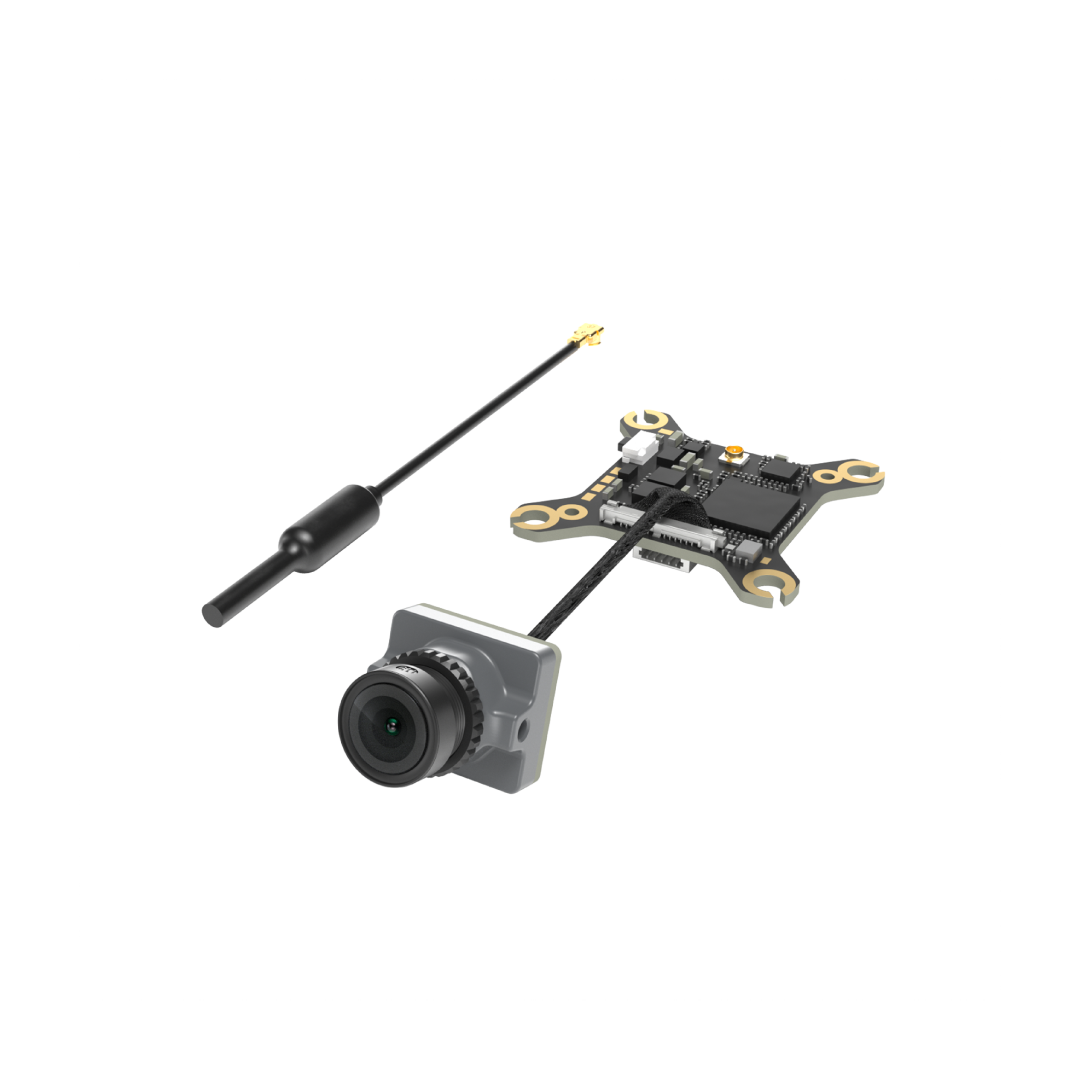
You also need a transmitter on the drone to get a digital image. Walksnail offers the Ascent Lite Kit ($35.99): just 6 grams, 1080p@60fps or 720p@100fps, up to 35ms latency (manufacturer), a 147° field of view, and up to 3km range, with switchable 25mW/100mW output. It connects via a 4-pin UART to F4/F7/H7 flight controllers running Betaflight, INAV, or Ardupilot.
Adding receiver and transmitter together, the complete system (Ascent VRX + Ascent Lite) runs around $135 — Walksnail actually sells the bundled combo at exactly that price.
Latency and range: manufacturer figures, with caveats
Worth being cautious here. The 35ms latency and 6-8km range Walksnail advertises are the company’s own figures, not independent measurements like the ones we cited for BetaFPV or DJI in our earlier review. There’s no reason to doubt they’re in that ballpark, but we don’t yet have a third-party test (Oscar Liang-style, high-speed camera) confirming them.
Walksnail Ascent vs BetaFPV P1 HD VRX Nano vs DJI O4 vs HDZero
| System | Full system price | Latency | Resolution | Range | Compatibility |
|---|---|---|---|---|---|
| Walksnail Ascent (VRX + Lite VTX) | ~$135 | 35ms (manufacturer) | 1080p@60fps / 720p@120fps | up to 6km (manufacturer) | Universal, any goggles/monitor with HDMI |
| BetaFPV ArtLynk (P1 Air Unit + VRX Nano) | ~$113 | 67ms (measured) | 1080p@60fps | >400m, tested >500m (measured) | Specific Fat Shark/SKYZONE models only |
| DJI O4 (Air Unit + Goggles 3) | ~$550-750 | 33-50ms | up to 4K/120fps (O4 Pro) | several km | Closed, DJI goggles only |
| HDZero Race V3 | ~$710 | 14ms | 720-1080p | – | Open, veteran racing ecosystem |
If you already read our BetaFPV P1 HD VRX Nano review, the direct comparison is interesting: the Ascent costs a bit more (~$135 vs ~$113), but in exchange offers universal HDMI compatibility instead of a physical fit limited to Fat Shark/SKYZONE, and a considerably higher advertised range — though again, without independent verification yet.
Who is it for?
Makes sense if…
- You have goggles or a monitor with an HDMI input that isn’t necessarily Fat Shark or SKYZONE
- You want to record directly from the receiver (built-in microSD up to 256GB)
- You’re after the lowest possible entry price into a complete digital system with its own VTX
- You’re not bothered that the latency/range figures are manufacturer-only for now
Better to skip if…
- You need independently validated latency numbers before buying
- You already own Fat Shark or SKYZONE goggles compatible with the BetaFPV P1 HD VRX Nano and prefer that slightly cheaper option
- You fly high-level competition where every millisecond counts (HDZero remains the reference there)
Our take
The Ascent VRX bets on universality: instead of fitting a handful of specific goggle models, it targets any HDMI-equipped screen. That’s a different strategy from BetaFPV’s P1 HD VRX Nano, and it makes sense if flexibility matters more to you than the absolute lowest price. The latency and range numbers are promising, but since they only come from the manufacturer we’re taking them with caution until independent tests appear — we’ll update this article if third-party measurements surface.
To explore the rest of our digital receiver and transmitter catalog, check our Video Transmitters category or our HD FPV Equipment category.
FAQ
Does the Walksnail Ascent VRX work with any FPV goggles?
According to Walksnail, yes, as long as the goggles, monitor, or TV has an HDMI input. Unlike the BetaFPV P1 HD VRX Nano, it’s not limited to a closed list of models.
Do I also need to buy a transmitter for the drone?
Yes. The Ascent VRX is only the receiver; to get a digital image you need a transmitter like the Ascent Lite Kit ($35.99) installed on the drone.
How much does the full system cost?
Adding the Ascent VRX ($99) and the Ascent Lite Kit ($35.99), the total is around $135 — Walksnail also sells it bundled at that exact price.
Is Walksnail’s claimed 35ms latency independently confirmed?
Not yet. These are manufacturer figures; unlike BetaFPV’s ArtLynk latency (67ms) or DJI O4’s, which were measured by independent reviewers with high-speed cameras, Walksnail Ascent’s numbers don’t have that external verification yet.