
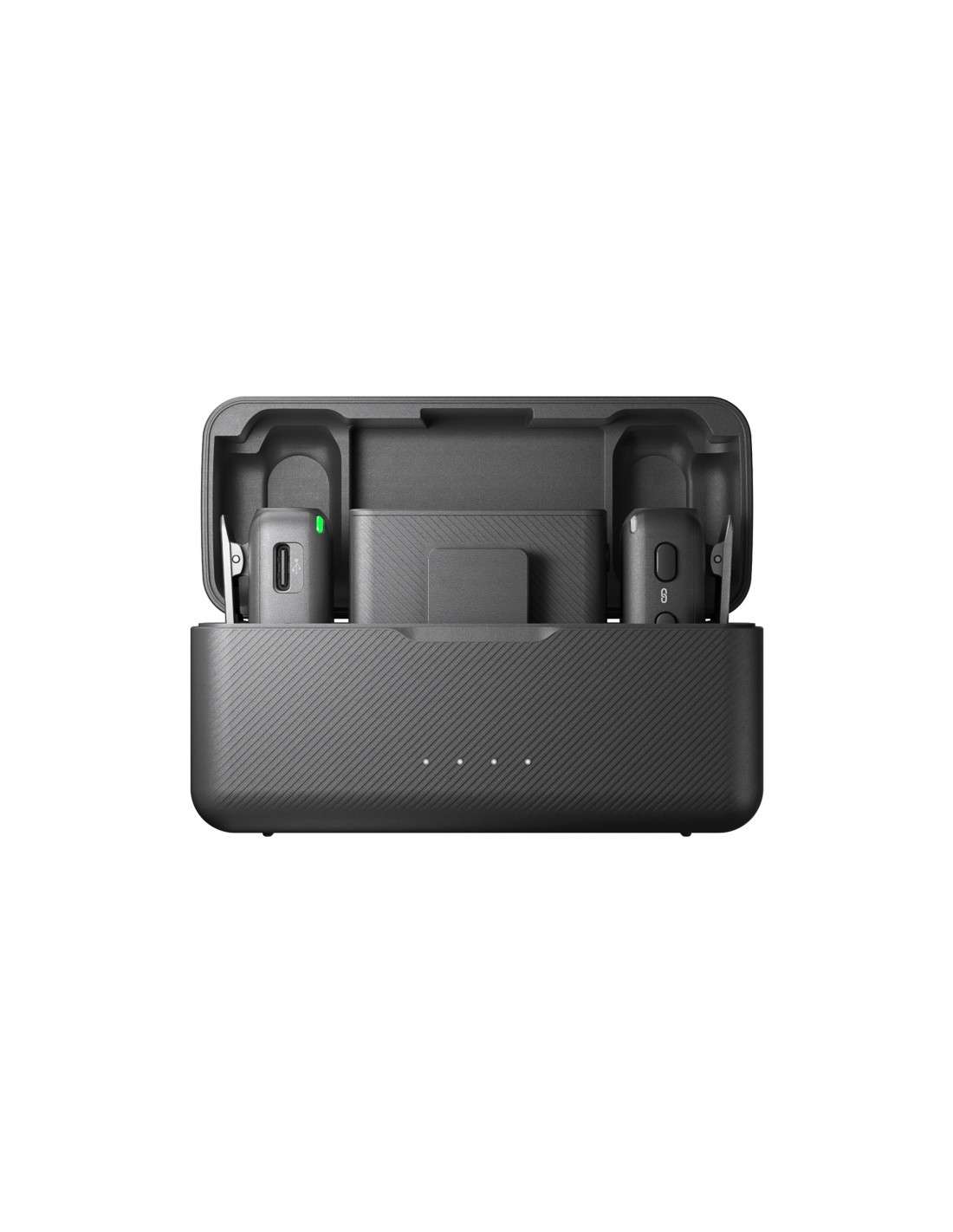
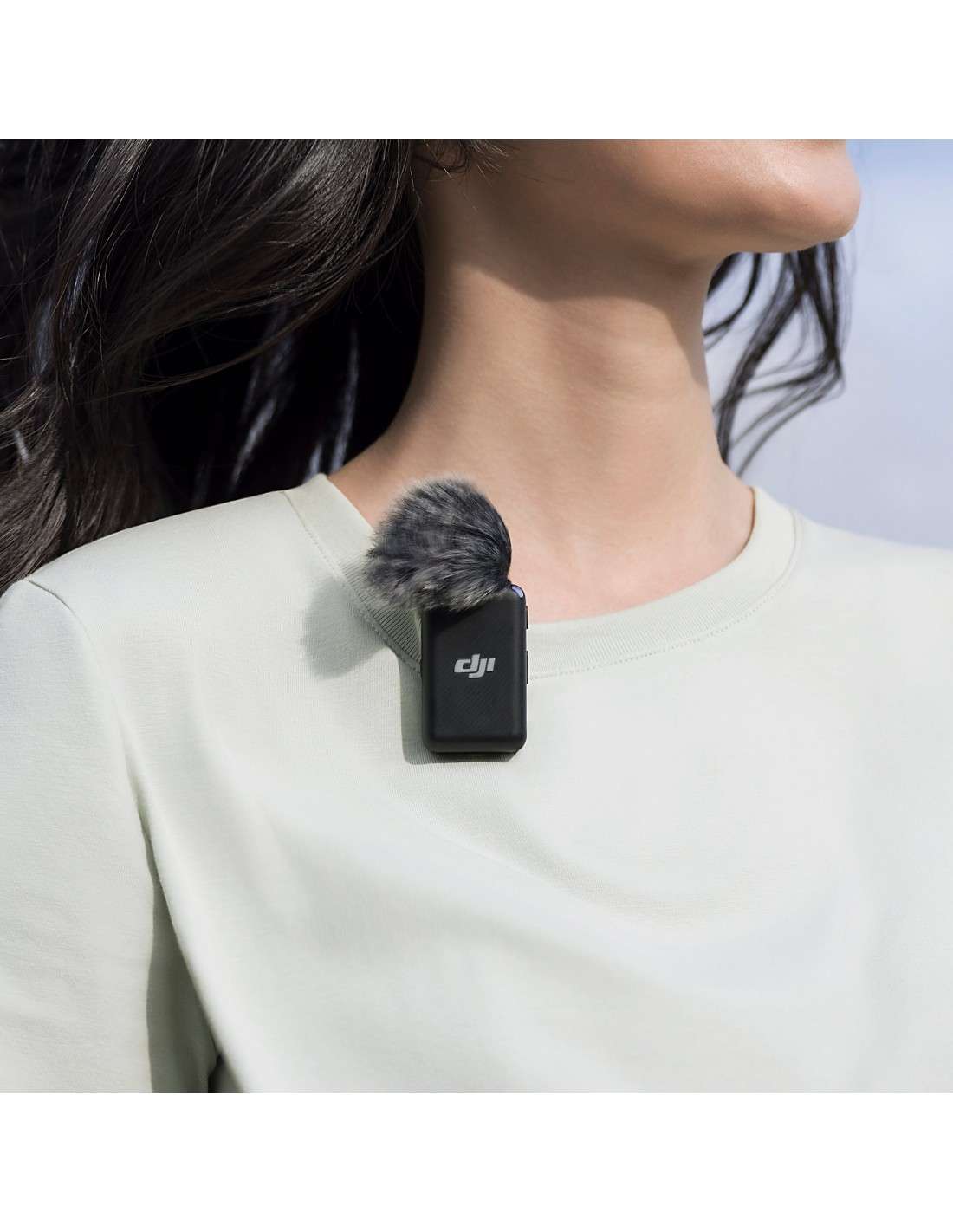
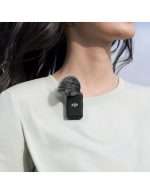

DJI Mic (2 TX + 1 RX + Charging Case)
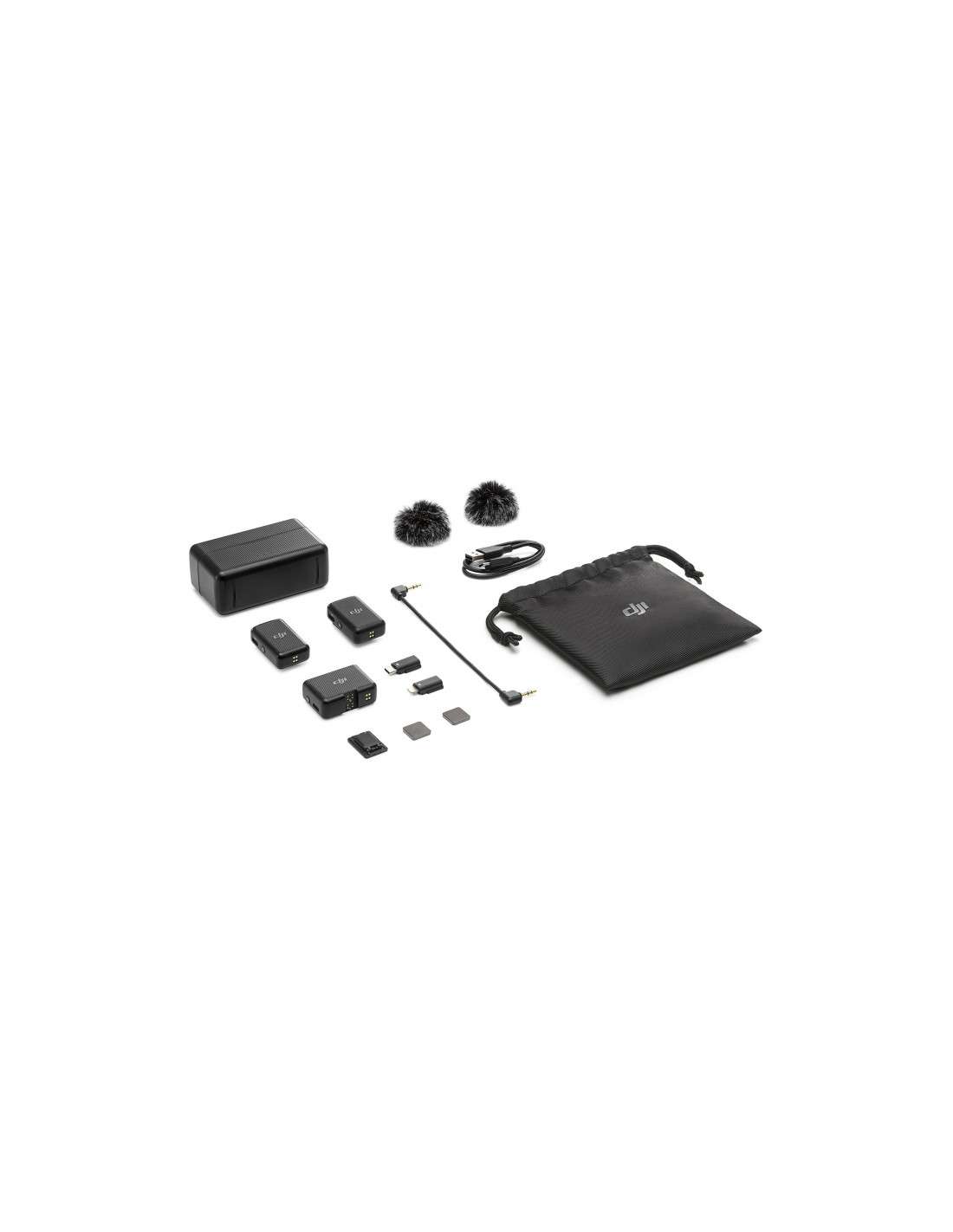
In the box:
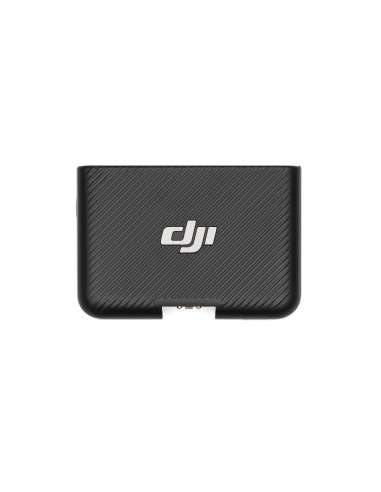
- Receptor DJI Mic × 1
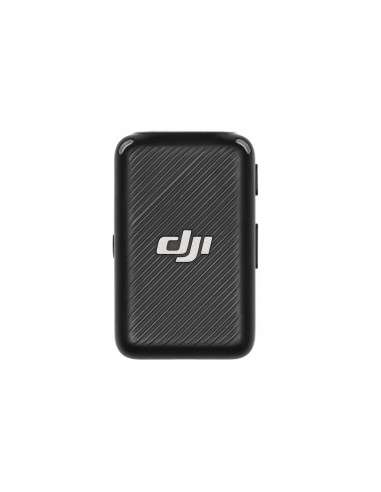
- Transmisor DJI Mic × 2
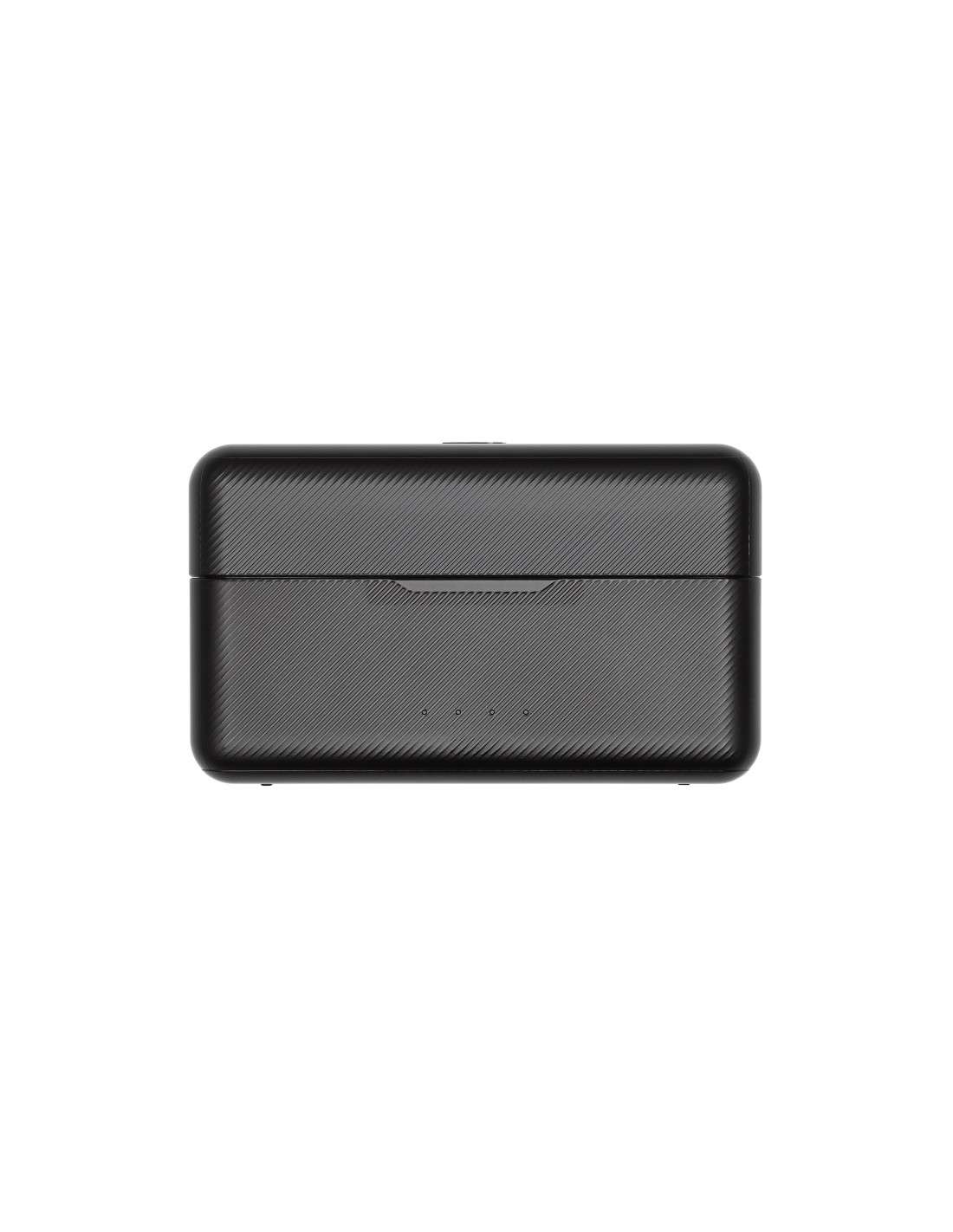
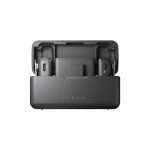
- DJI Mic Charging Case × 1
- DJI Mic Camera Audio Cable (3.5 mm TRS) × 1
- DJI Mic Mobile Phone Adapter (Type-C) × 1
- DJI Mic Mobile Phone Adapter (Lightning) × 1
- Antiviento DJI Mic × 2
- DJI Mic Magnetic Clip × 2
- DJI Mic Carrying Bag × 1
- DJI Mic Shoe Adapter × 1
- Charging Cable × 1
Specifications
Transmisores DJI Mic
- Modelo
- AST01
- Dimensiones
- 47.32 × 30.43 × 20.01 mm
- Peso
- 30 g
- Wireless mode
- GFSK 1 Mb/s and 2 Mb/s
- Equivalent Isotropically Radiated Power (EIRP)
- <20 dBm
- Operating frequency
- 2400-2483.5 MHz
- Battery type
- LiPo 1S
- Battery capacity
- 320 mAh
- Battery energy
- 1.23 Wh
- Battery voltage
- 3.85 V
- Charging temperature
- 5 to 45 °C (41 to 113 °F)
- Operating temperature
- −10 to 45 °C (14 to 113 °F)
- Charging time
- 70 min
- Operating time
- 5.5 horas
Receptor DJI Mic
- Modelo
- ASR01
- Dimensiones
- 47.44 × 32.21 × 17.35 mm
- Peso
- 24.9 g
- Wireless mode
- GFSK 1 Mb/s and 2 Mb/s
- Equivalent Isotropically Radiated Power (EIRP)
- <20 dBm
- Operating frequency
- 2400-2483.5 MHz
- Battery type
- LiPo 1S
- Battery capacity
- 320 mAh
- Battery energy
- 1.23 Wh
- Battery voltage
- 3.85 V
- Charging temperature
- 5 to 45 °C (41 to 113 °F)
- Operating temperature
- −10 to 45 °C (14 to 113 °F)
- Charging time
- 70 min
- Operating time
- 5 horas
Charging case
- Modelo
- ASB01
- Dimensiones
- 103.06 × 61.87 × 41.50 mm
- Peso
- 162.2 g
- Battery type
- LiPo 1S
- Battery capacity
- 2600 mAh
- Battery energy
- 10 Wh
- Battery voltage
- 3.87 V
- Charging temperature
- 5 to 45 °C (41 to 113 °F)
- Operating temperature
- 5 to 45 °C (41 to 113 °F)
- Charging time
- 2 hours 40 minutes
- Operating time
- Fully charges three devices simultaneously up to 1.8 times
General
- Microphone directions
- All directions
- Frequency response
- Corte bajo desactivado: 50 Hz-20 kHz
Corte bajo activado: 50 Hz-20 kHz
- Max. sound pressure level (SPL)
- 114 dB SPL
- Max. input level (3.5 mm)
- −17 dBV (THD <0.1 %)
- Ruido equivalente
- 23 dBA
- Monitor interface output power
- Salida máx. 22 mW a 1 kHz, 32 Ω
❓ Preguntas Frecuentes
Is this product compatible with my drone?
This component follows market standards. Check whether you use an analog or digital (HD) system and your battery voltage.
When will it arrive?
If you buy now, we ship within 24h from our warehouse in Spain.
Preguntas Frecuentes (FAQ)
Q: Is the DJI Mic compatible with DJI drones that do not have a 3.5mm audio input? How can I connect it in those cases?
A: Yes, the DJI Mic is compatible with DJI drones that do not have a 3.5mm audio input through its receiver. The DJI Mic receiver connects to the remote controller's USB-C or Lightning port (requires the corresponding included adapter) and transmits the audio digitally to the drone. The drone then integrates it into the video recording. It is important to check the specific compatibility with your DJI drone model on the DJI support page.
Q: According to the specifications, the transmitters and the receiver have a battery capacity of 320mAh and an operating time of 5.5/5 hours respectively. What does this mean in practical terms for a long FPV recording? Can I swap the batteries?
A: The 5.5-hour operating time for the transmitters and 5 hours for the receiver indicates the estimated continuous recording duration on a single charge. However, actual battery consumption can vary depending on use (volume, distance, interference). The internal batteries of the transmitters and receiver cannot be swapped. The charging case (2600mAh) lets you fully recharge the transmitters and the receiver several times, significantly extending total recording time in the field. We recommend bringing the charging case for longer FPV flight sessions.
Q: The DJI Mic operates on the 2.4 GHz frequency. Is there a risk of interference with the drone's control signal, which also uses 2.4 GHz, and how is this risk mitigated?
A: There is a theoretical potential for interference, since both the DJI Mic and the drone's remote controller can use the 2.4 GHz band. However, DJI has implemented technologies to mitigate this risk. The DJI Mic uses a frequency-hopping system (GFSK) that constantly changes frequency within the 2.4 GHz band to avoid interference. DJI also optimizes communication between the drone and the remote controller to prioritize the control signal, minimizing the chance of the audio signal interrupting drone control. Under extreme interference conditions there could be a slight degradation in audio quality, but it should not affect flight safety.

Reviews
There are no reviews yet