
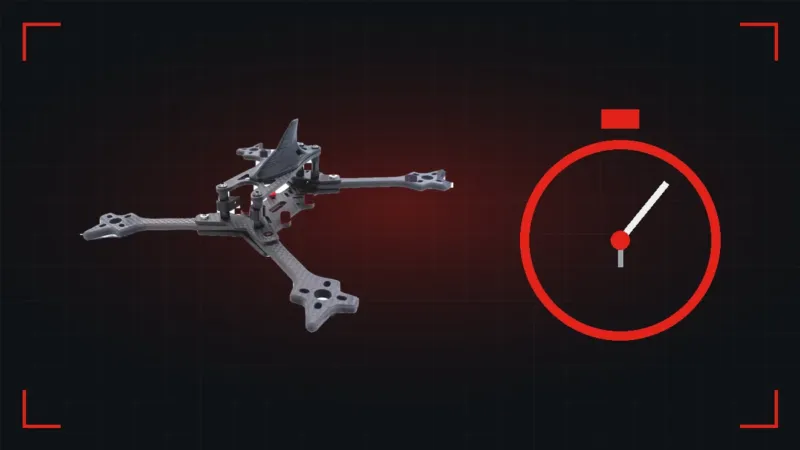
An FPV racing drone is one of the fastest and most demanding machines in this hobby. On a track, hundredths of a second count, and everything on the drone is designed to accelerate, turn and accelerate again without losing an instant. That is why choosing your first one is not about buying the most powerful, but the one that lets you finish your laps.
In this guide we explain what is special about an FPV racing drone, the 6 keys to choosing one, whether you should buy or build it, what you need to take to a race and how to start competing. If you are still learning to fly, we also tell you what to do before you set foot on a track.
What an FPV racing drone is
An FPV racing drone is a small, very light drone flown from goggles, seeing what its camera sees. The usual size is 5 inches, although there are also races for smaller drones and for indoor whoops. Unlike a filming drone, it carries no action camera or extra weight, because every gram takes away from its acceleration.
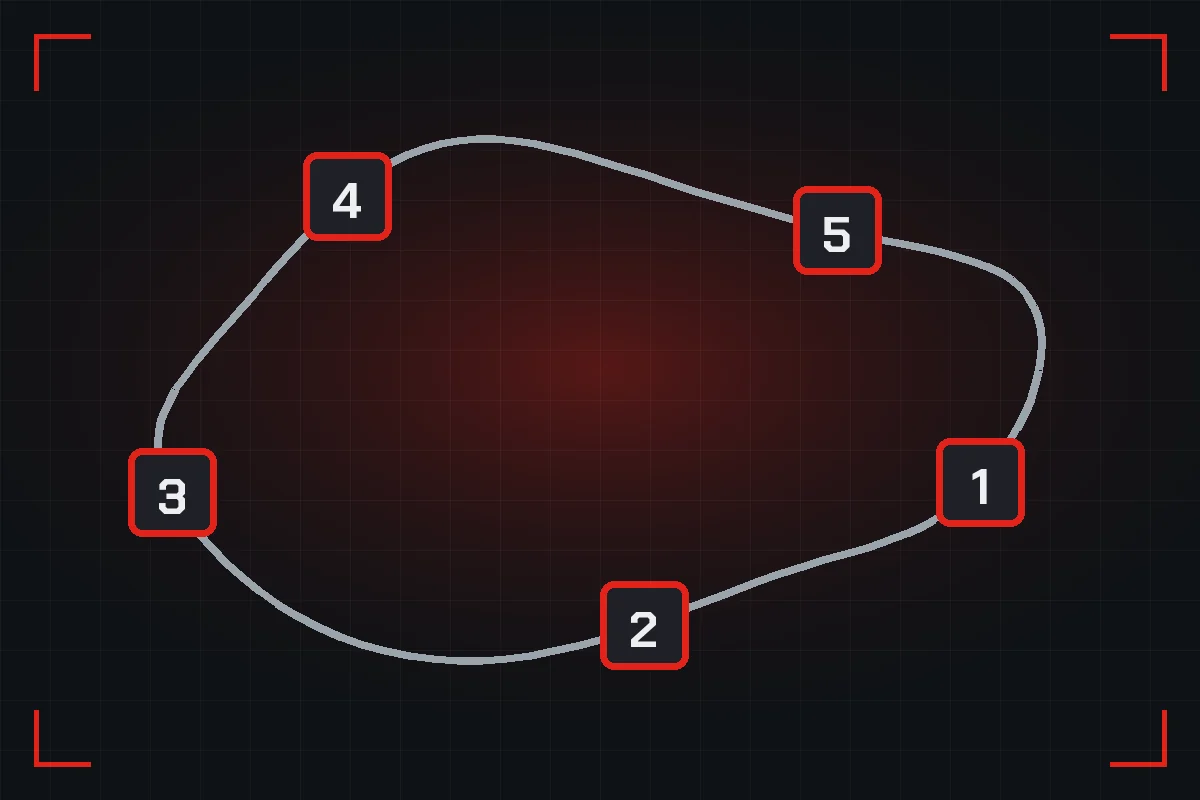
In a race, several pilots fly at once around a circuit with gates and flags. The winner is whoever completes the laps first, or whoever does the most laps in a fixed time. Rounds are short, about two or three minutes, so the drone and battery are pushed to the limit. A crash into a gate is part of racing, and surviving it is too.
How it differs from a freestyle drone
They look alike from the outside, but their priorities differ. Freestyle looks for control and toughness for tricks. An FPV racing drone looks for acceleration and immediate reaction. The table sums up the most usual differences. These are not fixed rules, because each pilot adjusts to taste, but they explain why one drone does not suit everything equally.
| Aspect | Racing | Freestyle |
|---|---|---|
| Priority | Acceleration | Control |
| Weight | As low as possible | Higher |
| Frame | Stretched X, thin arms | X, thick arms |
| Props | Stiff and light | Tough |
| Action camera | No | Often |
| Vídeo | Low latency | Better image |
6 keys to choosing your FPV racing drone
These are the decisions that matter most, in the order in which it is best to make them. If you are going to race in a club or league, check its rules first, because they can limit the size, cells or video system.
1. Size and class
The standard is 5 inches, and that is what you will find at most outdoor competitions. But a small FPV racing drone is an excellent way to start. Indoor whoop races are cheap, safe and great fun, and they teach the same technique. If only one class is raced in your area, start with that one.
2. Weight
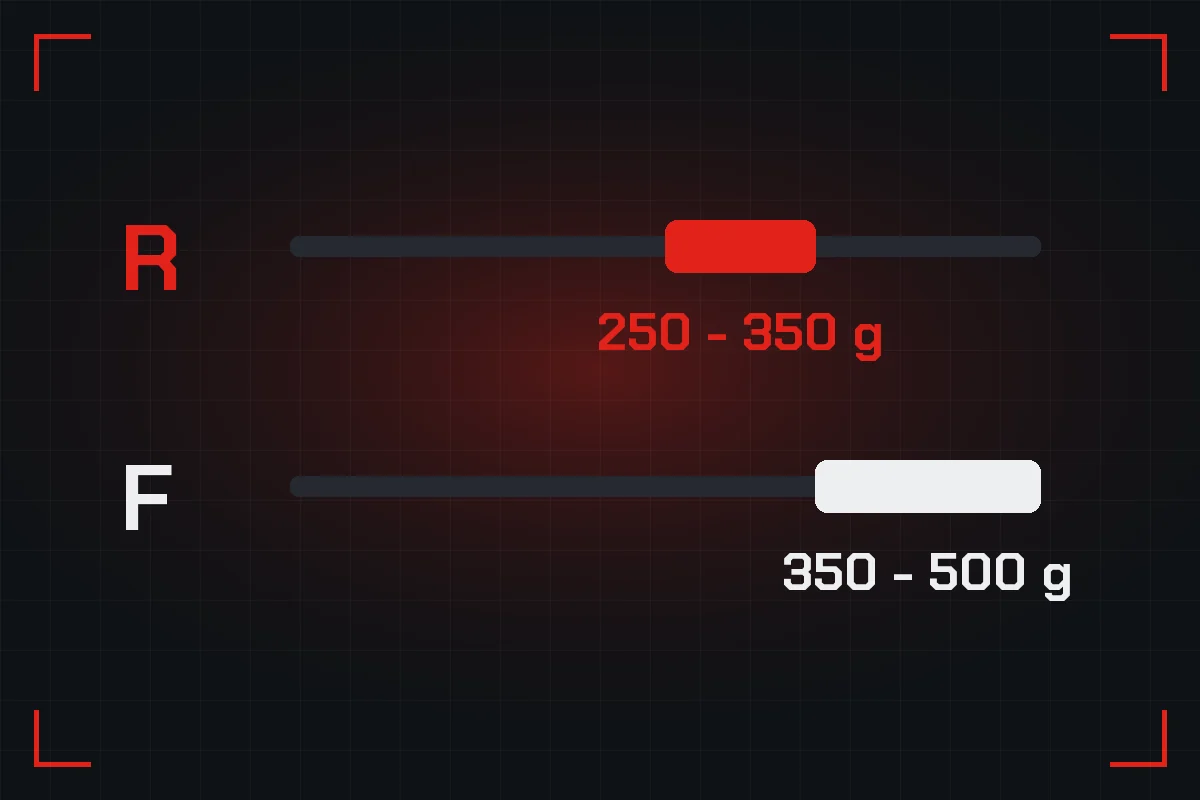
In racing, weight rules. A competition 5-inch can be around 250 to 350 grams without battery, while a freestyle one is usually between 350 and 500. Less weight means more acceleration and shorter braking. But do not obsess: an FPV racing drone that is too light breaks sooner, and you will win nothing if you do not reach the finish.
3. The frame
Racing frames are usually stretched X, lengthened from front to back to improve pitch control, with thin arms and little frontal area to cut through the air better. The position of the battery and how easy it is to change an arm between rounds also matter. Our guide to FPV frames explains in detail how to choose one.
4. The motors
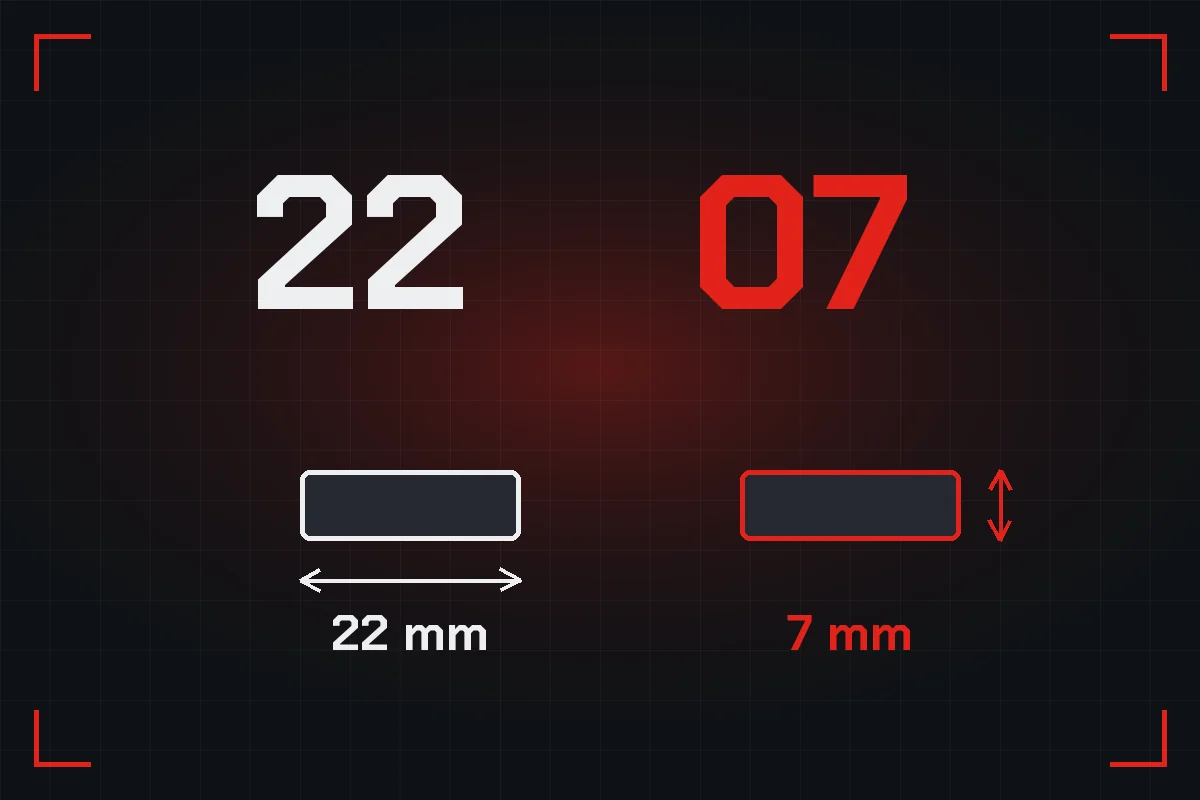
A motor name shows the size of its stator: a 2207 is 22 mm wide and 7 mm high. For a 5-inch FPV racing drone, sizes such as 2207 or 2306 are common, with lower KV if you fly 6S and higher KV if you fly 4S. Look for quick response and modest weight rather than maximum power on paper.
5. The battery
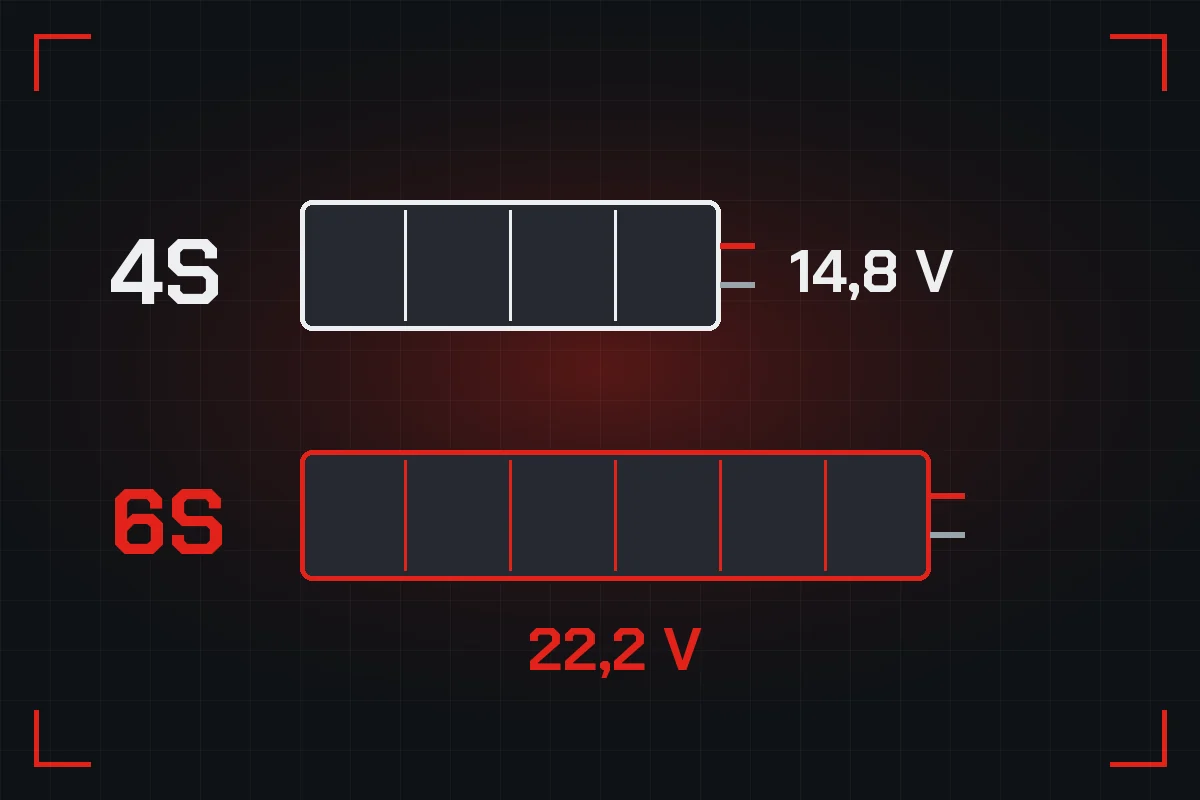
In competition, 6S has become the most common choice on 5-inch, because it holds its power better throughout the heat. 4S batteries are a little cheaper and less brutal, so they can be a good option to start with. Choose small capacities, so as not to add weight, and buy several of the same, because on a race day you will use them at a very high rate.
6. Video and radio
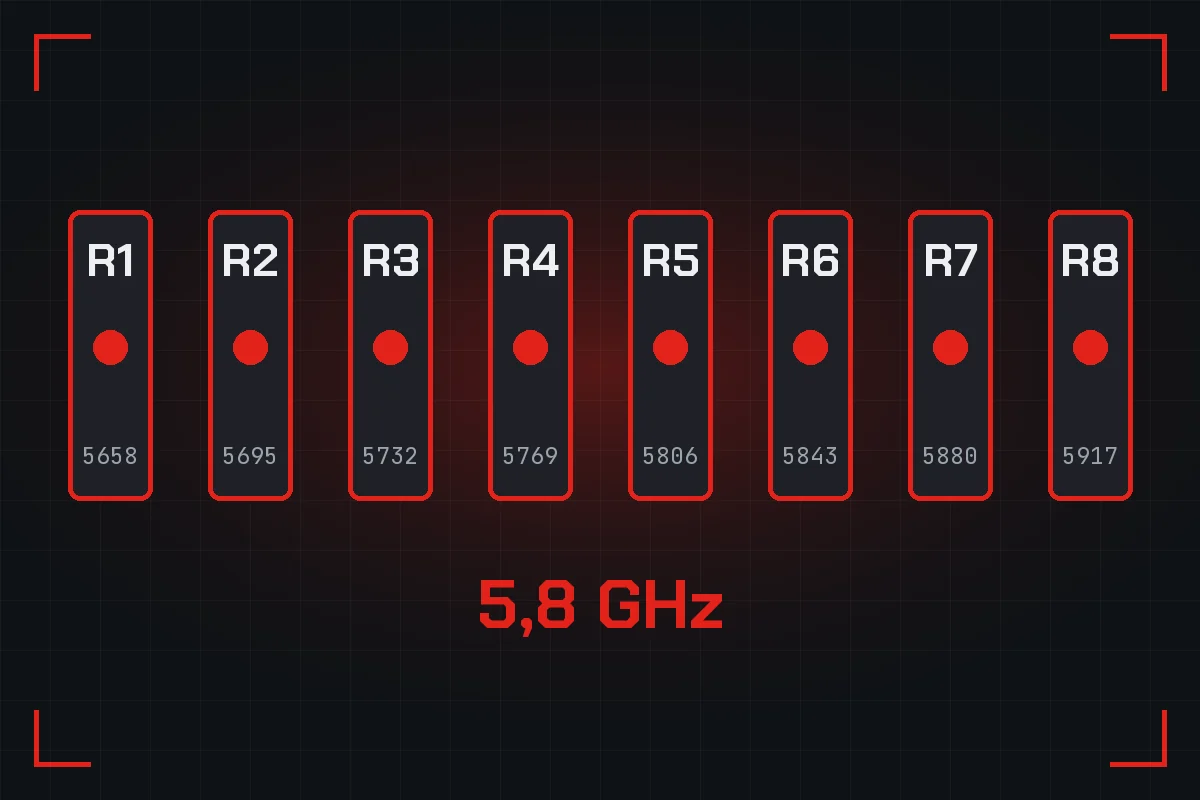
At 100 km/h, a few milliseconds of delay make a difference. That is why many races still use analogue video, which has hardly any latency and lets frequencies be shared among pilots. The eight Raceband channels in the 5.8 GHz band are designed for this. There are also low-latency digital systems, so ask what your club uses before you buy.
Classes for your first FPV racing drone
Not all races are flown with the same drone. Before spending, it is worth knowing which classes exist near you, because the drone you need depends on them. These are the most common.
Indoor whoops
They are raced in sports halls, warehouses or even at home, with 65 or 75 mm drones. It is the cheapest class and the one with the least risk, because a crash does hardly any damage. Many fast pilots keep racing in it during the winter. As a first FPV racing drone, a whoop is an excellent choice if there is a group nearby that flies them.
3-inch drones
They are a middle ground. They are flown outdoors or in large spaces, are cheaper to repair than a 5-inch and allow tighter circuits. Some clubs organise races in this class precisely because they need less space and are less dangerous. Ask whether there are any nearby, because they are not so widespread.
5-inch FPV racing drone
This is the top class, with large circuits and very high speeds. It demands more practice, more spending and more space, and crashes are more serious. Some leagues use spec rules, which limit parts or batteries so that the best pilot wins. Those classes are a good way in, because they do not force you to buy the latest gear to compete.
How to lighten an FPV racing drone
If you already have a drone and want to improve, removing weight is usually more noticeable than changing motors. Start with what is not needed: action camera mounts, large plastic parts and wires that are too long. Cut wires to the right length and use aluminium screws where they take no stress. On an FPV racing drone, a few grams off shows at the exit of every corner.
Do not overdo it, because there are parts you should keep. A protected antenna and arms in good condition save your race. Weigh everything with a kitchen scale and note the grams before and after each change. That way you will really know what worked.
Basic settings for flying on a track
You do not need secret settings for your first FPV racing drone. Start from the Betaflight defaults or from a preset designed for racing. Then adjust three things. Rates should allow quick turns without making the drone twitchy. A throttle limit helps you keep control while you learn. And the voltage alarm warns you before you damage the battery. That is enough for a long time.
Basic technique for going faster
An FPV racing drone will not make you fast by itself. These four habits improve your times more than any new part, and you can practise them on the simulator starting today.
Look at the next gate
If you are looking at the gate you are crossing, you are already late. Get used to finding the next one before you pass the current one, because the drone goes where you look. Adjusting the camera angle helps too: fast pilots tilt it more so they can see well when leaning far forward.
Use the throttle smoothly
Abrupt movements lose height and speed. Practise holding a constant height and metering the throttle in turns. A smooth pilot is usually faster than an aggressive one, and uses less battery too, which makes a big difference on the last lap.
Find a clean line
The shortest path is not always the fastest. Enter corners wide and exit pointing at the next gate, just like on a car circuit. When you have a good line, repeat it until it comes naturally. Winning pilots do almost the same lap over and over.
Review your recordings
Recording what you see in the goggles lets you analyse where you lose time. See where you brake too much or run wide in a corner. Compare with faster pilots in your club. With an FPV racing drone, every tenth you cut comes from a small detail you did not see before.
Safety on the track
At these speeds, a drone can do a lot of damage. Always fly behind a net or a protected area, away from spectators, and do not arm the drone until the race director says so. Disarm as soon as you land and do not collect the drone until you are given permission, because other pilots may still be flying. Outside an event, choose clear, permitted places with no people nearby, and check the rules in your area. A good pilot is not only the fastest, but also the one who looks after others. If you fly with goggles, ask someone to watch the surroundings for you, because you only see what the camera sees.
Buying or building your FPV racing drone
Many racing pilots build their own drones, and not only for fun. On a competition day something is going to break, and knowing how to repair it in a few minutes between rounds is almost as important as flying well. That is why, if your goal is to compete, learning to solder and build will give you a real advantage.
If you prefer to start with something ready-made, an FPV racing drone in BNF form lets you fly sooner. Do check that it takes standard spares, though. If you choose to build, start with the frame, continue with the stack and motors, and check in our FPV Configurator that everything fits. When it is ready, our guide to setting up Betaflight takes you step by step to the first flight.
How to start competing
You do not need to be fast to go to your first race. What matters is flying consistently and safely. These steps take you from zero to the starting line without skipping anything.
Practise on the simulator
Racing simulators let you do hundreds of laps for very little money, and many fast pilots train that way every day. Learn to pass through gates at a constant speed before trying to go fast. It is the cheapest way to improve, and no props get broken.
Set up your own track
You do not need professional gates. With a few flags or home-made hoops, or even two trees in a permitted place, you can lay out a simple circuit. If you fly whoops, a few chairs in the living room will do. Time your laps: your goal is not the fast lap, but three laps in a row without crashing.
Find a club
Flying with a club is the fastest way to progress. They will help you set up your FPV racing drone, tell you which channels to use and teach you the safety rules of each track. Many also organise days for beginners. Ask too about the licences, insurance and permits each event requires.
What to take to a race
A race day is long, and gear wears out fast. This list will stop you going home early because of a screw.
- One FPV racing drone and, if you can, a spare.
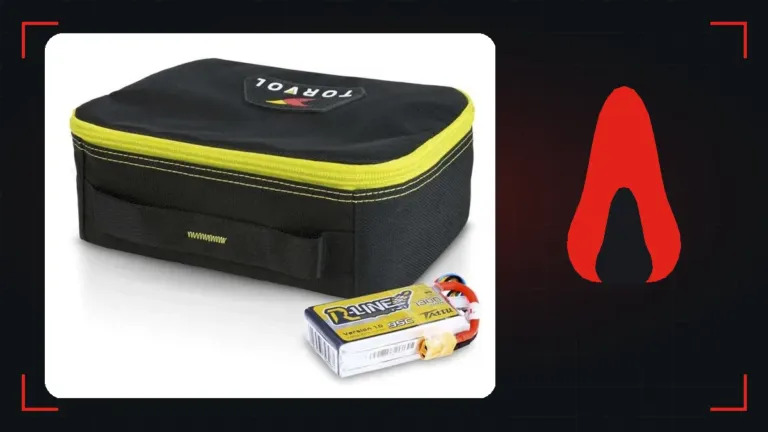
- Several charged batteries, with their fireproof bag.
- Lots of props: more than you think you will need.
- Arms, screws, antennas and a spare camera.
- Portable soldering iron, solder and basic tools.
- Charger and a suitable power supply.
- Laptop and USB cable to make adjustments.
How to look after your FPV racing drone between heats
There is little time between one round and the next, so it pays to have a routine. Check the props and replace any that are damaged. Make sure the motor screws are still tight, the arms have no cracks and the antenna is still in place. Touch the motors to see whether one is hotter than the others, because that usually signals a problem.
Label your batteries and use each one the same number of times. Let them cool before charging them again, even if you are in a hurry. And at the end of the day, leave them at storage charge. Your FPV racing drone performs as well as its batteries do, and tired cells show up right on the last lap.
Common mistakes with your first FPV racing drone
Buying too much power
A drone you cannot control is not fast, it just crashes sooner. If your times are not improving, the problem is almost never the motor. Limit the throttle on your radio at first, and raise it when you complete clean laps.
Forgetting the frequency
Switching on your video without warning at a track can knock another pilot out of the air in the middle of a race. Always ask which channel you can use, and do not power up the drone until you are told. It is the basic rule of courtesy at any competition.
Chasing only the fast lap
Many races are won by finishing, not with one spectacular lap. Fly clean and consistently: if the others crash, you carry on. Speed comes by itself with hours of practice.
Frequently asked questions about FPV racing drones
How fast does an FPV racing drone go?
A competition 5-inch can exceed 100 km/h on a straight. Even so, on a track, acceleration and corner exit matter more than top speed.
Can I race with a freestyle drone?
Yes, especially when starting out. It will be a little slower, but it will help you learn the track and the rules. Check that it meets the race rules.
How long does a battery last in racing?
About two or three minutes at race pace. That is why capacities are small and you need a good number of batteries per day.
Do I need digital video to compete?
No. Analogue is still very common in racing. Ask your club which system they use before buying anything.
To the starting line
A good FPV racing drone is light, easy to repair and right for your level. Decide the class, keep the weight in check, choose motors and battery well, and ask at your club before buying. After that, what will really make you fast is not in the shop: it is hours on the simulator and clean laps.
Leave a comment