

A LiPo bag is one of the cheapest purchases in all your FPV gear, and also one of the most important. LiPo batteries store a lot of energy in very little space, and that energy is what makes your drone fly. Treated well, they are safe. Treated badly, they can catch fire.
In this guide we explain what a LiPo bag does and what it does not do, how to choose one, the 7 basic rules for charging safely, how to store and transport batteries and what to do with a damaged one. There is no need to be afraid, but you do need a few habits.
What a LiPo bag is and what it is for
A LiPo bag is a pouch made of fire-resistant fabric, usually fibreglass with a coating. It is used to store batteries and, above all, to keep them inside while charging. If a battery fails, the LiPo bag helps contain the flames and sparks, and gives you a few very valuable seconds to react.
It is worth understanding its function properly. A LiPo bag does not put out a fire or make a damaged battery safe. It reduces the risk but does not eliminate it. That is why charging must always be done with someone present, on a non-flammable surface and away from any flammable material. The bag is the last barrier, not the first.
Why LiPo batteries need care
A LiPo is made up of lithium polymer cells. They give a lot of current and weigh little, exactly what a drone needs. In exchange, they do not tolerate abuse well. If they are punctured, short-circuited, overcharged or discharged too far, they are damaged inside, and in the worst case they can heat up out of control and burn.
Most problems have the same cause: a charging mistake, a battery that keeps being used after a crash, or a short circuit from a bare wire. It is almost never bad luck. That is why a few habits remove most of the risk, and the LiPo bag covers what may remain.
How to choose a LiPo bag
They all look the same in photos, but there are differences that matter. These are the four points to check before buying.
Size of the LiPo bag
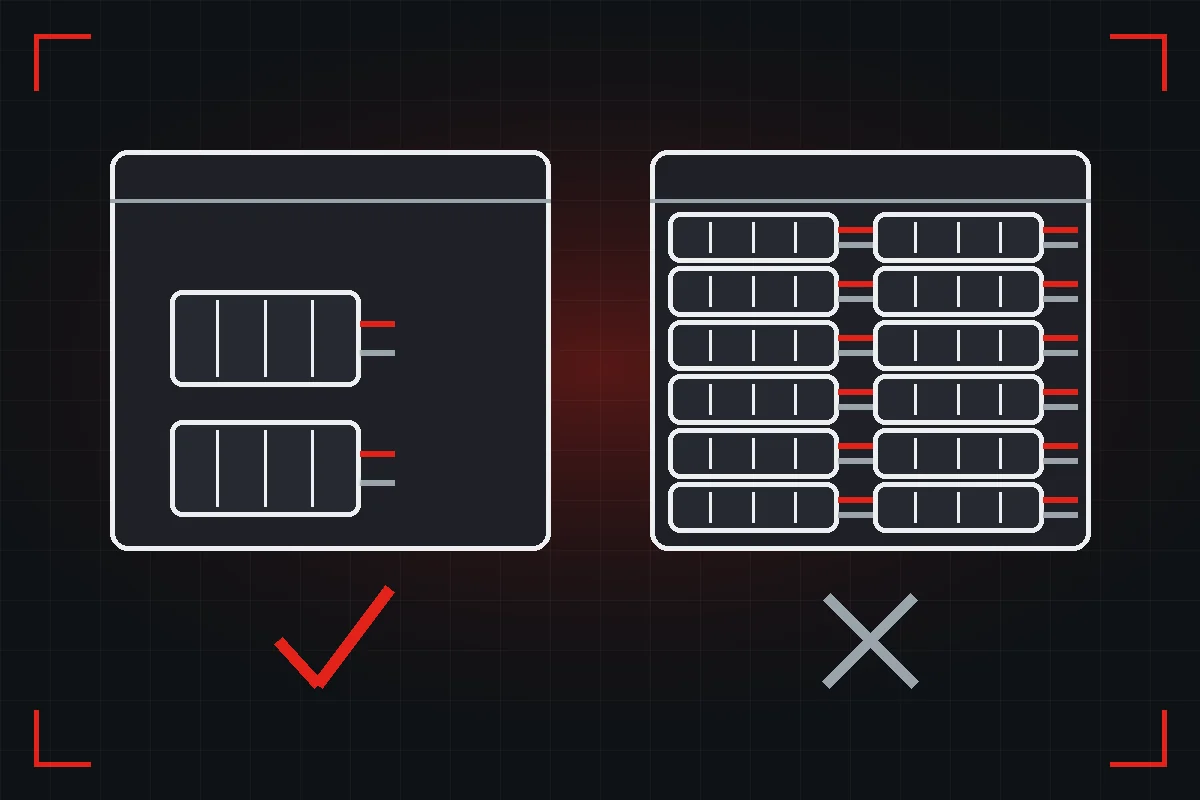
The LiPo bag should be somewhat larger than the batteries you will put in. If it is a tight fit, the fabric stays taut and the batteries press against each other. If you are going to charge several at once, choose a large one or use two bags. There should be air and free space inside so that heat does not build up.
Material and seams
Look for thick fibreglass, with firm seams and no thin areas. Very cheap bags can be little more than a cover. A good LiPo bag can be felt by touch: it is dense and does not crease like ordinary cloth. Check from time to time that it has no tears or burnt areas.
Closure
Most close with velcro or a flap. The closure must keep the bag shut, but not airtight. If a battery fails, it releases gas under pressure, and that gas must be able to escape. Never put the bag inside a sealed box, because that pressure can make it burst.
How many you need
With one large LiPo bag at home and a small one for transport, most pilots have enough. If you accumulate many batteries, spread them across several bags instead of piling them up. If one fails, the fewer it has nearby, the less damage it will do.
7 rules for charging with your LiPo bag
Charging is the moment of greatest risk. These seven rules are simple and soon become habit. Follow all of them, every time, even if you are in a hurry to go flying.
1. Do not leave it alone
Never charge a battery if you are going out or going to sleep. Stay nearby, where you can see and smell if something goes wrong. Even inside the LiPo bag, you need to be present to act in time.
2. Choose the place carefully
Charge on tile, stone, metal or concrete, away from curtains, papers, sofas and wood. A kitchen with a stone worktop or a clear garage is better than the desk in your room. Make sure the air circulates.
3. Check the cells and the type
Before starting, confirm the battery type and the number of cells on the charger. A LiPo is not charged the same way as another type of battery, and a wrong number can overcharge it. Check these details every time, because it is the mistake that causes most trouble.
4. Always use balance charging
Connect the balance lead and use balance charging mode. That way the charger controls each cell separately and stops one rising higher than the others. An unbalanced pack performs worse and is more dangerous. Cells should never go above 4.2 V on a normal LiPo.
5. Charge at 1C if in doubt
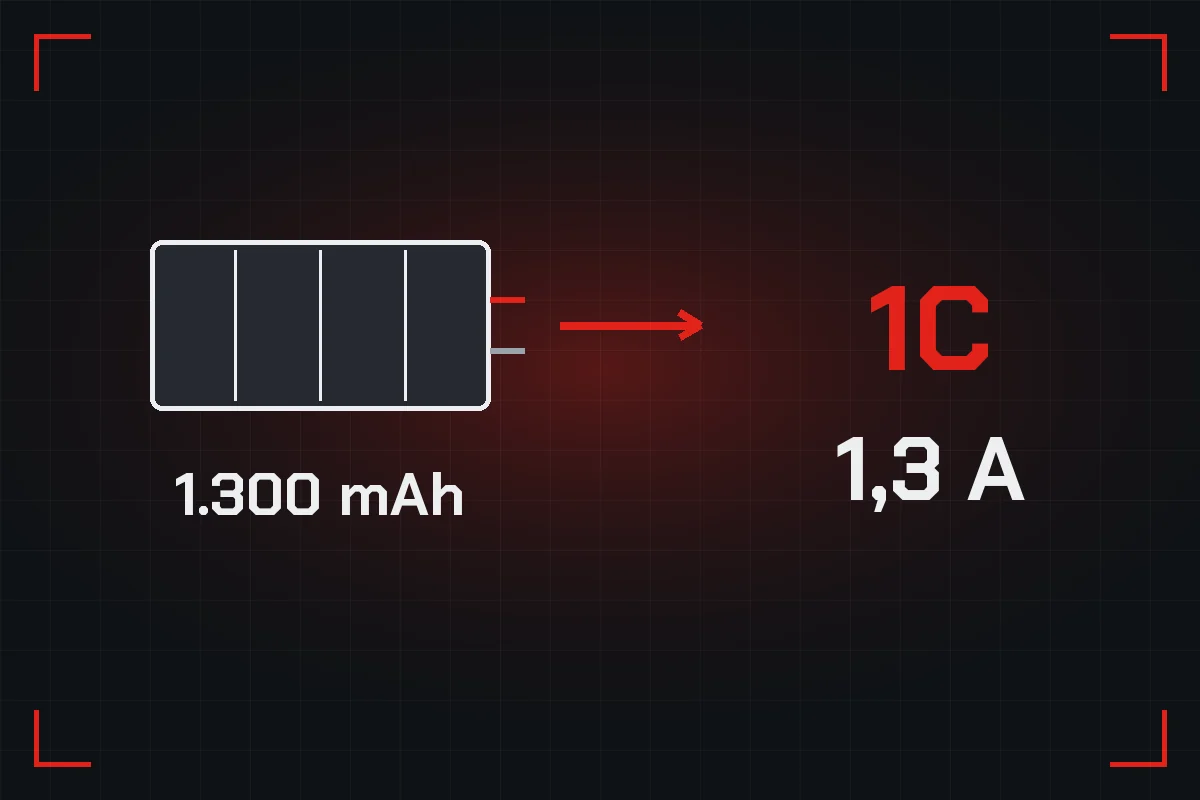
The C shows the charging current relative to capacity. A 1,300 mAh battery charged at 1C uses 1.3 A. Some accept more, but 1C is the safest and preserves the battery best. If you charge several in parallel, take great care and follow your charger instructions.
6. Let it cool down
After flying, a battery can be hot. Wait for it to reach room temperature before charging. Charging while hot wears it out faster and increases the risk of swelling.
7. Put the battery in the LiPo bag
Place the battery inside the LiPo bag during charging, with the wires coming out of the opening without being trapped. Check that the connector cannot short-circuit. Close it enough to contain a possible failure, without crushing the wires.
How to store batteries in the LiPo bag
A LiPo keeps best at half charge. If you are not going to fly for two or three days, leave it at about 3.8 V per cell. Many chargers have a storage mode that does this by itself. Storing it full for weeks wears it out, and leaving it empty can ruin it.
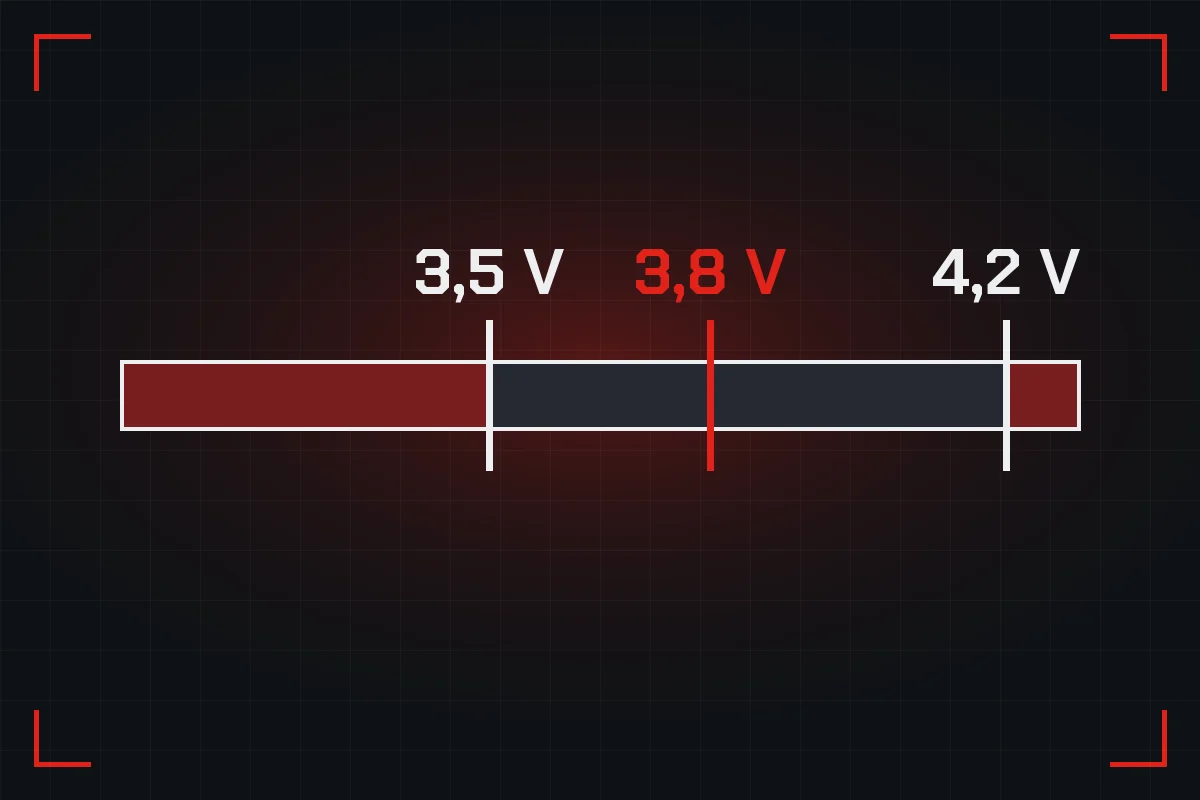
When flying, land when the battery is around 3.5 V per cell at rest. Going much lower damages the cells and shortens their life. Afterwards, store the batteries in the LiPo bag in a cool, dry place, away from sunlight and anything that burns. A car in the sun is one of the worst places, because the temperature rises very fast.
Label your batteries with a number or date. That way you will know which one is giving trouble, and you can rotate them so they are all used equally. It is a simple trick, and it helps you spot in time a battery that no longer performs as it did.
How to transport batteries
In a backpack or car
Carry batteries inside a LiPo bag or a rigid box, separated from metal objects such as keys or tools, which could short-circuit the connector. Protect them from knocks and never leave them loose at the bottom of your backpack. For long trips, carry them at storage charge.
By plane
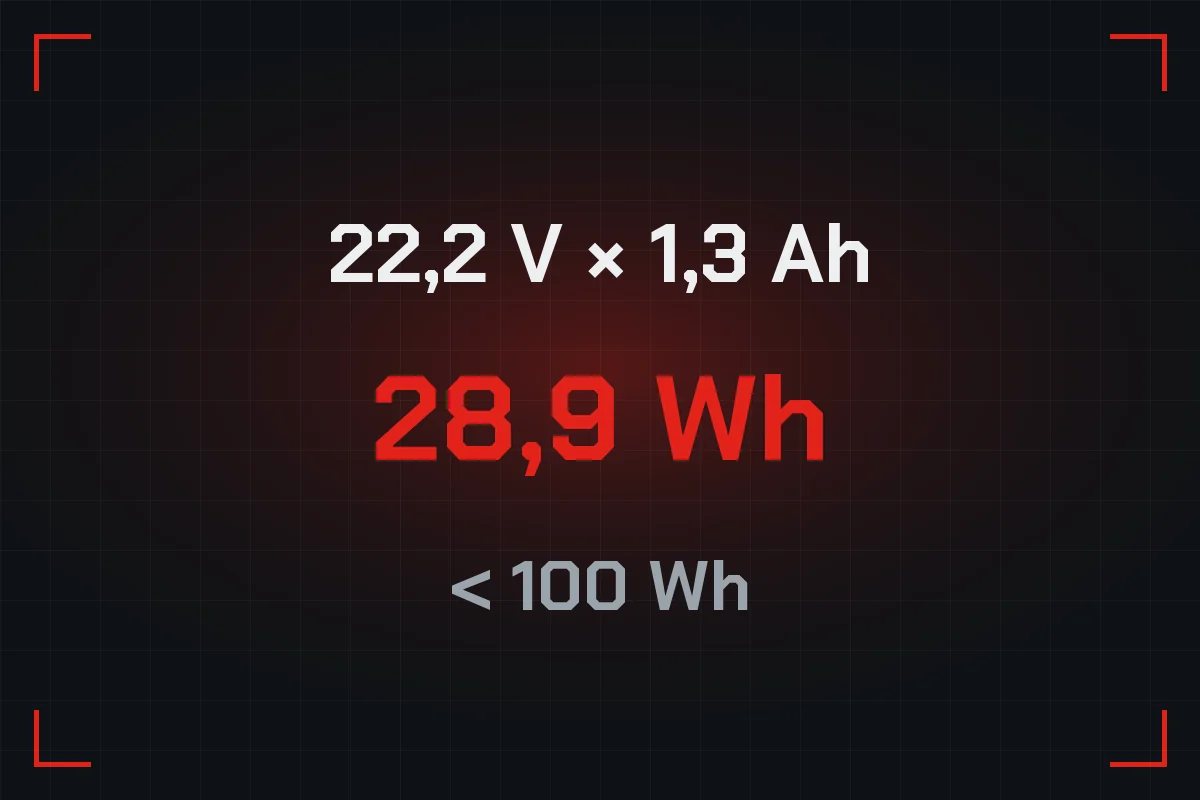
The usual air transport rules require batteries to be carried in the cabin, not the hold, with their terminals protected. Generally, up to 100 Wh per battery is allowed without special permission, and between 100 and 160 Wh usually requires airline approval. To find the Wh of your battery, multiply its volts by its amp hours. Each airline has its own rules, so check them before travelling.
What the figures on a LiPo battery mean
Understanding the label helps you charge correctly and choose the right bag size. There are four figures, and you learn them quickly.
Cells
The figure with an S shows how many cells it has in series. Each cell has a nominal 3.7 V, so a 6S has 22.2 V. This is the figure you must set correctly on the charger. A drone designed for 4S must not use a 6S, because the electronics would burn out.
Capacity
The mAh show how much energy it stores. More capacity means more flying minutes, but also more weight. There is a point where adding capacity stops paying off, because the drone flies worse. To fly for longer, it is often better to carry more batteries than one bigger battery.
Discharge rate
This is the figure with a C, such as 75C or 120C, and it refers to how much current it can deliver. Do not trust very high numbers too much, because each brand measures them in its own way. It is better to go by the opinions of other pilots and the real behaviour of the battery in flight.
Connector
XT60, XT30 and other connectors must match your drone and charger. Never force a connector, and check the polarity if you make an adapter. A reversed connector can destroy the electronics in an instant, and can also create a dangerous short circuit.
How to extend the life of your batteries
Batteries are one of the most recurring costs in FPV, so looking after them also saves money. Three habits make almost all the difference.
Do not push to the last second
Set a voltage alarm on your radio or goggles and respect it. That last minute of flight is usually the one that does most damage to the battery. If you get used to landing with a margin, you will notice your batteries last many more cycles with the same power.
Avoid extreme heat and cold
Heat speeds up wear. Do not leave batteries in the sun or in the car in summer. In the cold, on the other hand, they deliver less power, so it is worth keeping them in an inside pocket until it is time to fly, and starting gently for the first few seconds.
Safety at the flying field
Safety does not end at home. Take your LiPo bag to the field and keep used and charged batteries separately in it, so you do not mix them up. After a hard crash, look for the battery carefully, especially if it was thrown off, and set it aside for a while before handling it too much. In dry areas, be very careful: a damaged battery in dry grass can start a fire. Carry water with you and do not fly when the fire risk is high.
LiPo bag, metal box or case
The bag is not the only way to store batteries. Many pilots also use metal boxes or dedicated cases. Each option has its place, and they are not mutually exclusive: it is common to charge in a bag and store in a box. What matters is that the container is never fully sealed, because the gases from a failing battery need to escape. This table sums up where each one fits.
| Option | Best point | Use it for |
|---|---|---|
| LiPo bag | Cheap, light and flexible | Charging and travelling |
| Unsealed metal box | Very tough | Storing many at home |
| Battery case | Order and protection | Taking them to the field |
If you choose a metal box, add a non-conductive base so the connectors do not touch the metal, and leave a way out for gases. If you use a fabric or foam case, remember that it protects against knocks, but not always against fire. In any case, keep the whole thing away from exits, stairs and walkways, so that a failure does not cut off your way out.
What to do with a damaged battery
Check your batteries after every session and, above all, after every crash. These are the signs that something is wrong.
- It is swollen or soft to the touch.
- It has dents, cuts or torn plastic.
- The wires are bare or the connector is loose.
- It gets hotter than normal for no reason.
- One cell drifts a long way from the others.
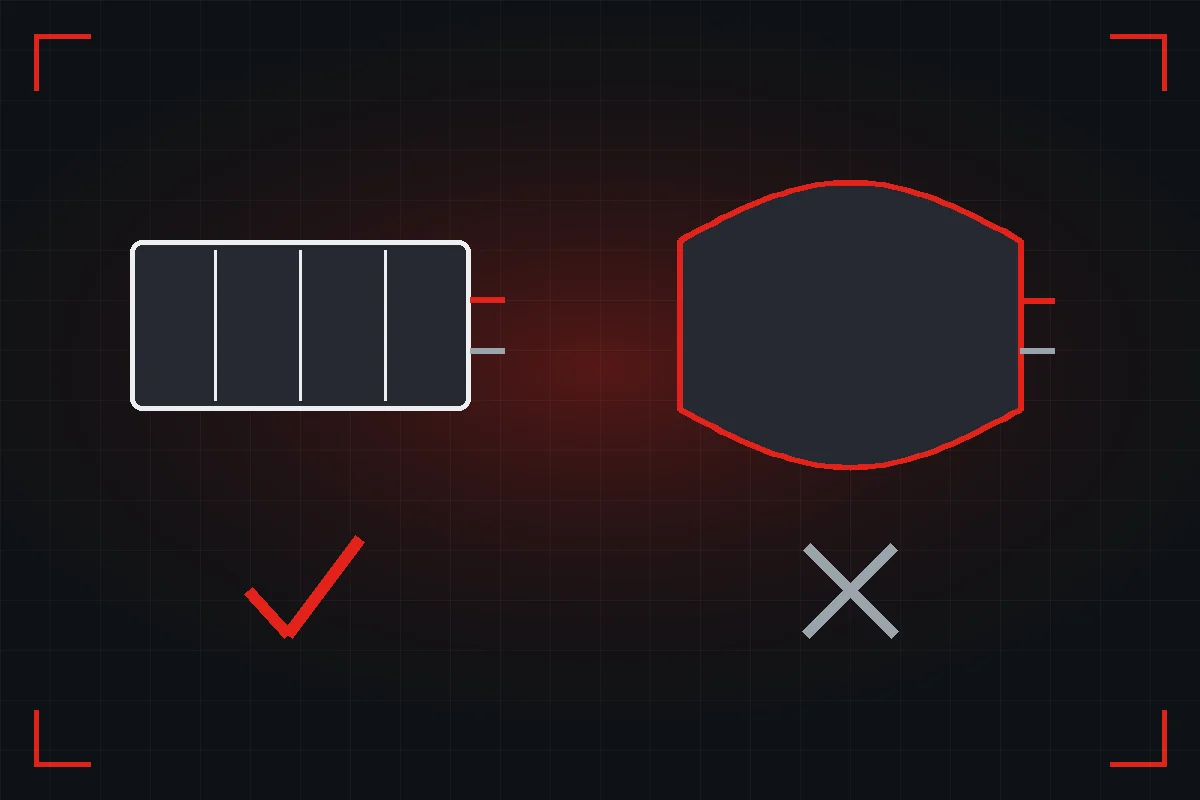
If you see any of these signs, stop using that battery. Do not charge it or put it in the drone. Place it in your LiPo bag, outdoors or on a non-flammable surface, away from other batteries, and watch it for a while. A battery that has been knocked can take time to cause problems, so keep an eye on it even if it looks fine.
How to dispose of it
A LiPo never goes in the ordinary rubbish. Take it to a recycling centre or battery collection point, with the terminals covered with insulating tape. Ask your local council where to do this. If the battery is visibly damaged, tell the staff at the centre, because they must handle it with care.
What to do if a battery catches fire
Your safety comes first. If you see smoke or flames, move away and get others away, because the fumes are toxic and must not be breathed in. If the fire spreads or you are not sure you can control it, leave the place and call the emergency services. If you can, and without risk, unplug the charger from the mains. No battery or drone is worth putting yourself in danger.
Quick checklist for using your LiPo bag
- You always charge with someone present.
- The LiPo bag is on a non-flammable surface.
- The charger shows the right type and cell count.
- You use balance mode with the balance lead.
- The battery is cool and has no visible damage.
- If you will not fly soon, you leave it at 3.8 V per cell.
- The connectors cannot touch metal in transport.
Common mistakes with the LiPo bag
Thinking the bag fixes everything
A LiPo bag does not give you permission to charge while you sleep. It is one more protection, not a substitute for supervision or common sense.
Overfilling it
Putting all your batteries in one small LiPo bag concentrates the risk. If one fails, the others are right next to it. Spread them out and leave free space.
Continuing to use a swollen battery
Swelling indicates internal damage. Squashing it or strapping it tighter does not fix it. Retire it and replace it, even if it still seems to give good flying minutes.
Frequently asked questions about LiPo bags
Is a LiPo bag really necessary?
Yes. It costs very little compared with the damage it can prevent, and it adds a real barrier between a faulty battery and your home.
Can I charge inside the LiPo bag?
Yes, that is what it is designed for, always with someone present and on a non-flammable surface.
How often should I replace a LiPo bag?
When it has tears, open seams or burnt areas. If it has contained a fire, always replace it.
Is a LiPo bag useful for small 1S batteries?
Yes. They have less energy, but they are still lithium batteries. Storing them together in a bag prevents short circuits from connectors touching.
How many cycles does a LiPo last?
It depends on how you treat it. If you do not over-discharge it and store it at half charge, it will last much longer than if you always push it to the limit.
Fly with peace of mind
Looking after batteries is not complicated: charge under supervision, use balance mode, store them at half charge and use your LiPo bag. With those habits you will have safer gear, and your batteries will last a good deal longer. It is one of the few savings in FPV that costs nothing.

Leave a comment